Israel's strikes on Iran were years in the making: analysts

Israel's unprecedented strikes on Iran, which have killed top military leaders and nuclear scientists, required years of meticulous intelligence gathering and infiltration, experts say.

Israel said it hit hundreds of targets on Friday alone, and has since continued its attacks, striking a defence facility and fuel depots on Sunday.

The fiercest-ever exchange of fire between the arch foes came in the midst of ongoing talks between Tehran and Washington seeking to reach a deal on Iran's nuclear programme.

Portraits of Iranian military generals and nuclear scientists killed in Israel's attack early on June 13

Trump suggests Iran, Israel need 'to fight it out' to reach deal

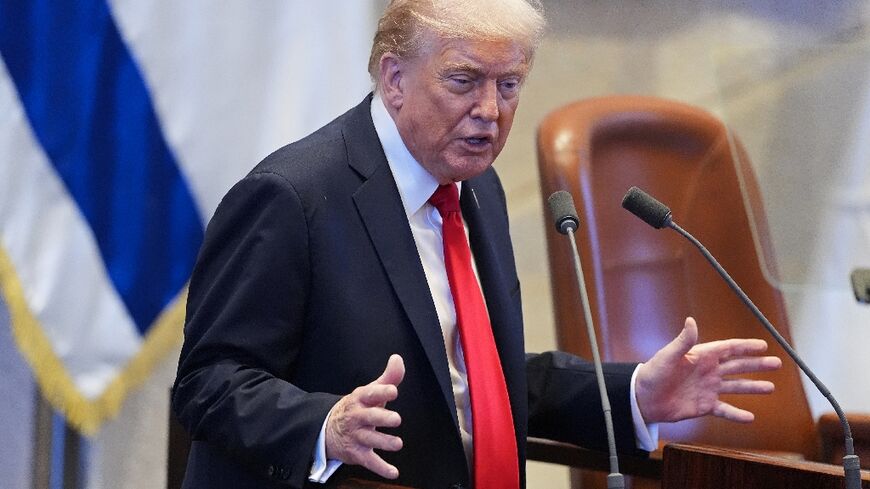
US President Donald Trump on Sunday urged Iran and Israel -- who are locked in an exchange of military strikes -- to "make a deal," but suggested they might need to "fight it out" first.

"I think it's time for a deal," Trump told reporters, as Israel and Iran exchanged a fresh barrage of missile strikes and threatened more devastation in a conflict that appeared to be intensifying.

"But sometimes they have to fight it out, but we're going to see what happens," Trump said, speaking at the White House before heading to Canada to take part in a G7 summit.

US President Donald Trump said Iran and Israel needed to reacha deal to end the conflict, but suggested they needed to 'fight it out' first

Tens of thousands rally for Gaza in Netherlands, Belgium

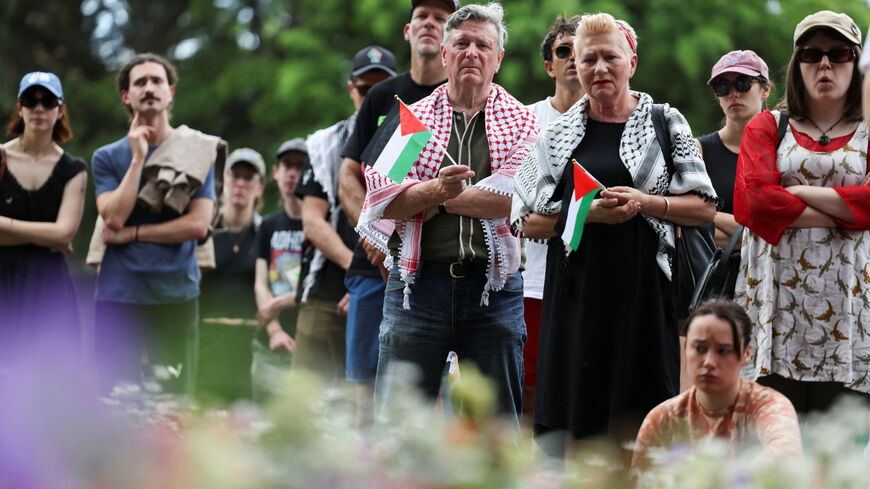
Tens of thousands of people dressed in red marched through the streets of The Hague and in Brussels on Sunday to demand more action from their governments against what they termed a "genocide" in Gaza.

In France on Saturday, thousands of other people joined similar protests, as part of a weekend mobilisation around the world against the Israeli offensive in the Palestinian territory.

Some 150,000 people participated in the march in the Hague, according to organisers.


Rights groups such as Amnesty International and Oxfam organised the demonstration through the city to the International Court of Justice, creating a so-called 'red line'

'Nothing left': Israelis grapple with damage from Iran strike

A shocked Julia Zilbergoltz said she had never experienced anything like the Iranian missile strike that hit her home in central Israel early Sunday.

"I'm stressed and in shock. I've been through hard times in my life, but I've never been in a situation like this," Zilbergoltz told AFP, as she gathered her belongings and left her apartment building in Bat Yam, near the coastal city of Tel Aviv.

"I was at home, I was sleeping and I didn't hear the siren" warning of an incoming missile attack, she said.

She was awoken instead by the loud booms that followed.

A man walks past a heavily damaged building following an overnight Iranian missile strike in Bat Yam, central Israel

Israel-Iran conflict: latest developments

Israel and Iran traded heavy fire for a third straight day on Sunday, with mounting casualties and expanding targets marking a sharp escalation in hostilities between the longtime foes.

Strikes in both countries persisted throughout the day, as the death toll rose following Israel's large-scale attacks on Friday aimed at crippling Iran's nuclear and military infrastructure, sparking retaliation.

The intensity of the exchanges fuelled concerns of a drawn-out conflict that could engulf the Middle East, even as world leaders call for an end to the violence.

A plume of heavy smoke and fire rise over an oil refinery in southern Tehran, after an overnight Israeli strike

Israel pounds Iran, Tehran hits back with missiles

Israel unleashed a new wave of attacks against Iran on Monday, targeting missile sites after Tehran carried out deadly overnight strikes and both sides threatened more devastation.

After decades of enmity and a prolonged shadow war fought through proxies and covert operations, Israel's surprise assault on Iran last week has touched off the most intense fighting yet and triggered fears of a lengthy conflict that could engulf the Middle East.

Israeli air defence systems work to intercept Iranian missiles over Tel Aviv on Sunday

Internet restored in Gaza after 3 days: Palestinian telecom official

Internet is back up in the war-battered Gaza Strip, the head of the Palestinian Telecommunications Regulatory Authority told AFP on Saturday, after a three-day blackout blamed on Israel's military.

"The network is up now in all of the Gaza Strip," said the regulatory body's CEO Laith Daraghmeh.

The Palestinian Authority's telecommunications ministry reported on Thursday that internet and fixed-line communications were down after Israeli forces targeted a fibre optic cable, a claim Israel has not commented on.

Palestinians raise their phones as they try to catch an internet signal in Gaza City

'We are strong': Israelis defiant despite deadly Iran strikes

Tal Friedlander was grateful to be alive on Saturday after emerging from a bomb shelter in central Israel to find his apartment entirely destroyed by an Iranian missile strike.

The shell of a residential building stood at the scene of the hit in Ramat Gan near Tel Aviv, with much of the block reduced to concrete rubble and mangled metal.

The debris-strewn street was lined with the wreckage of several destroyed cars, an AFP journalist reported, a rare sight in Israel where advanced air defences usually intercept incoming attacks.

Iran hit Israel with waves of drone and missile strikes overnight

How much damage has Israel inflicted on Iran's nuclear programme?

Israel's strikes on Iran have taken aim at its nuclear facilities, amid fears that the Islamic republic is seeking to develop nuclear weapons -- an accusation Tehran denies.

Experts told AFP that while the attacks might have caused some damage to Iran's nuclear programme, they are unlikely to have delivered a fatal blow.

- What is the extent of the damage? -

Experts say that while the strikes damaged nuclear facilities, including the Natanz site, they are unlikely to have delivered a fatal blow

Israel-Iran conflict: what we know

Israel targeted Iran's air defence capabilities on Saturday, pressing on with a massive wave of strikes it began a day earlier that targeted Iranian nuclear and military facilities, prompting counterattacks by Iran.

Israeli Prime Minister Benjamin Netanyahu vowed to hit "every target of the ayatollah regime", adding: "What they have felt so far is nothing."

Iranian President Masoud Pezeshkian, meanwhile, warned the continued "aggression will be met with a more severe and powerful response".

Iranians drive past an anti-Israel poster in Tehran's Enghlab Square