Iran-Israel war: latest developments

Iran fired at a US military base in Qatar on Monday, as the war between longtime foes Israel and Iran raged after the United States sent bombers to attack the Islamic republic's nuclear sites.

Here are the latest developments:

- US base in Qatar -

Iran launched a retaliatory strike aimed at the United States' Al Udeid military base in Qatar, the largest US military facility in the Middle East.

Qatar said it had successfully intercepted the attack, which it called a "flagrant violation" of sovereignty and said it reserved the right to respond.

Protesters rallied in Tehran after US strikes on Iranian nuclear sites

US bases in the Middle East

Iran on Sunday threatened military bases used by US forces to launch attacks on the country's nuclear sites, saying such facilities would be considered legitimate targets.

The United States has thousands of troops deployed on bases across the Middle East.

Below, AFP examines countries with major concentrations of US forces in the Middle East, which falls under the US military's Central Command (CENTCOM).

- Bahrain -

US military personnel participate in a Best Squad Competition at the Buehring base in Udairi, in Kuwait, on May 10, 2023

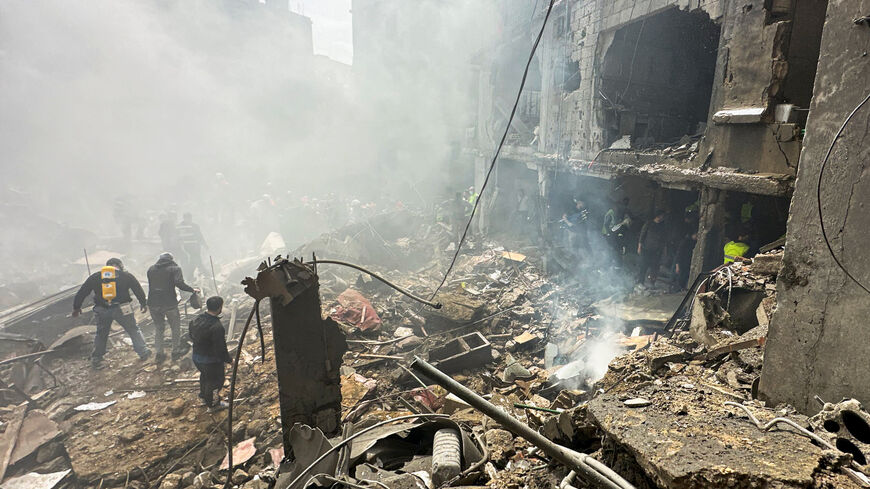
Blood, destruction at Damascus church after suicide attack

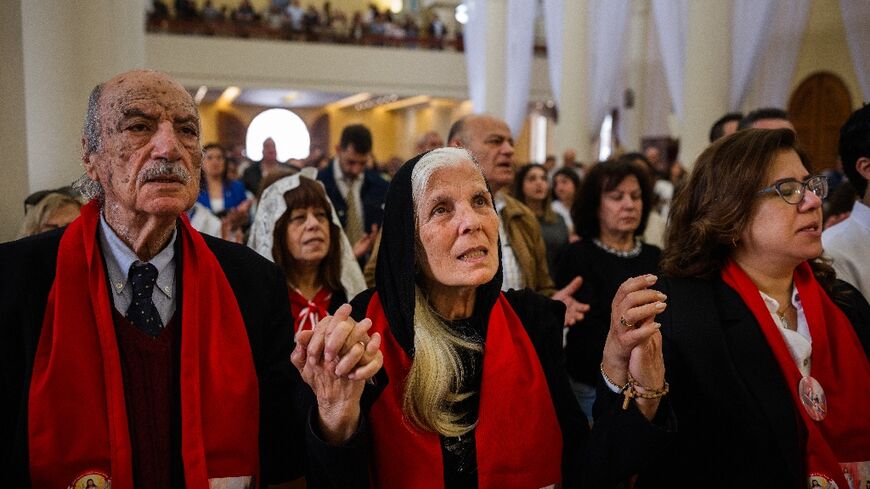
At the blood-stained Saint Elias church in Damascus, Umm George wept as she desperately searched for her son, who was among the worshippers when a suicide bomber struck on Sunday.

In vain, she tried to convince Syrian security forces, who had cordoned off the area, to let her into the church, whose windows had been blown out and whose interior was covered with debris and damaged pews.

"My son was praying in the church," she told AFP. "I tried to contact him but his mobile phone is off the air and I haven't been able to find him."

The Syrian government blamed the attack on the Islamic State group

Democrats assail 'erratic' Trump over Iran strikes

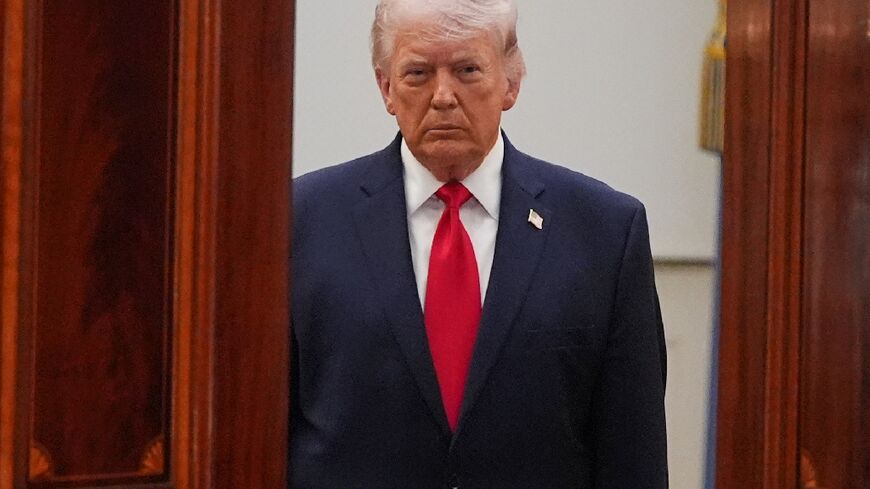
Democrats bristled Sunday over US President Donald Trump's decision to launch air strikes on Iran without seeking authorization from Congress, accusing the Republican of violating the constitution and demanding a vote to rein in his war powers.

Members of the Senate and House of Representatives argued that US intelligence had not shown an imminent threat from the Middle Eastern country that justified Trump's unilateral action.

Senate Minority Leader Chuck Schumer (right) and House Minority Leader Hakeem Jeffries, pictured outside the White House in 2024, both released statements rebuking President Donald Trump

Suicide attack on Damascus church kills at least 22

A shooting and suicide bombing at a Damascus church during a packed service on Sunday killed at least 22 people, authorities said, blaming a member of the Islamic State group for the unprecedented attack.

The international community condemned the attack, the first of its kind in the Syrian capital since Islamist-led forces toppled longtime ruler Bashar al-Assad in December.

It was also the first inside a church in Syria since the country's civil war erupted in 2011, according to a monitor.

People inspect the damage at the site of a suspected suicide attack at the Saint Elias church in Damascus

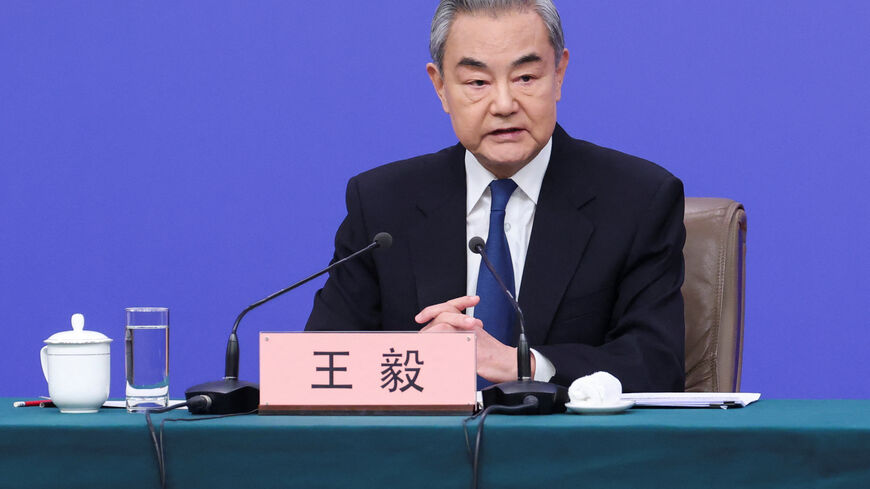
Muslim countries urge end to Israel's 'aggression' against Iran

Foreign ministers from countries of the Organisation of Islamic Cooperation (OIC) on Sunday urged Israel to end its "aggression" towards Iran, without mentioning the US strikes on the Islamic republic's nuclear sites.

Arch-rivals Israel and Iran have been at war since June 13 when Israel, claiming Tehran was on the verge of acquiring a nuclear bomb, launched a wave of devastating air strikes, killing top army commanders and scientists.

Iran immediately retaliated, and the two sides have been trading barrages since.

Araghchi said Sunday morning that the United States and Israel had 'breached a major red line'

Massive US bunker-buster bombs make combat debut in Iran strikes

A powerful US bunker-busting bomb was used in combat for the first time when Washington struck Iranian nuclear sites this weekend.

Israel had carried out a week of air strikes on Iran, but does not possess the GBU-57 -- a 30,000-pound (13,600 kilogram) weapon viewed as necessary to reach the most deeply buried facilities -- or the aircraft needed to deploy it.

General Dan Caine, the top US military officer, told journalists on Sunday that Washington's forces dropped 14 of the bombs in the massive operation aimed at knocking out Tehran's nuclear program.

The only aircraft capable of deploying the GBU-57 bunker buster bomb is the American B-2 Bomber, a stealth aircraft

Iran vows retaliation after US strikes on nuclear sites

Aerial assaults raged between Iran and Israel early Monday, while Tehran vowed retaliation over the bunker-buster bombs American warplanes unleashed at the weekend on three nuclear sites.

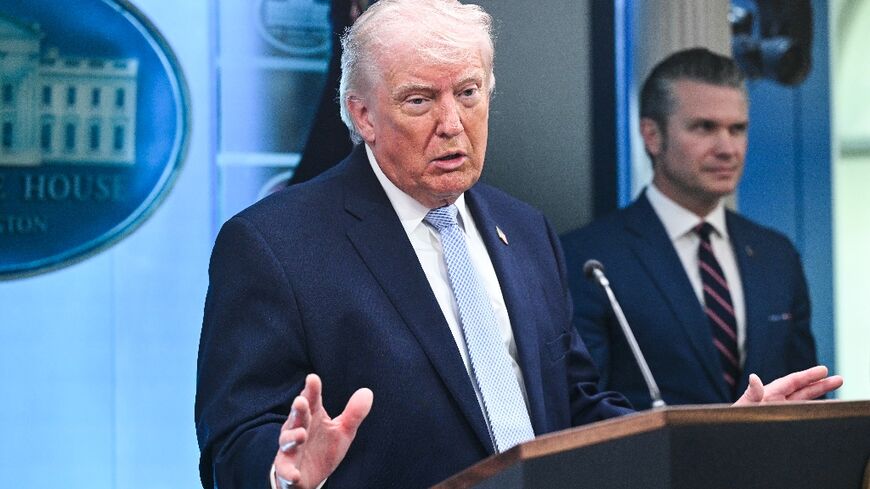
US President Donald Trump insisted the attack had "obliterated" Iran's nuclear capabilities, but other officials said it was too soon to determine how significantly Tehran's nuclear programme had been impacted.

As the world awaited Iran's reply, supreme leader Ayatollah Ali Khamenei called the bombing campaign Israel launched on June 13 "a big mistake".

Protesters rallied in Tehran after US strikes on Iranian nuclear sites

US strikes on Iran: what we know

The United States has carried out strikes that caused "extremely severe damage" to three of Iran's nuclear facilities, the top US military officer, General Dan Caine, said on Sunday.

President Donald Trump had spent weeks pursuing a diplomatic path to replace the nuclear deal with Tehran that he tore up during his first term in 2018.

But he ultimately decided to take military action against Iran's nuclear program, which had already been bombarded in a more than week-long Israeli campaign that has also targeted Tehran's top military brass.

The B-2 is a stealth aircraft capable of flying non-stop from the US, with a payload of 40,000 pounds of bombs

United behind Iran war effort, Israelis express relief at US bombing

Israelis expressed relief and optimism Sunday after US President Donald Trump ordered air strikes on Iran, 10 days into a war that has widespread public support.

Despite daily nerve-shredding trips to bomb shelters and growing damage around the country, Israelis appeared united behind Prime Minister Benjamin Netanyahu's move to attack Iran on June 13.

Trump's decision to authorise overnight bombing raids on Iran's nuclear facilities has provided further reassurance after more than a week of sorties by the Israeli air force.

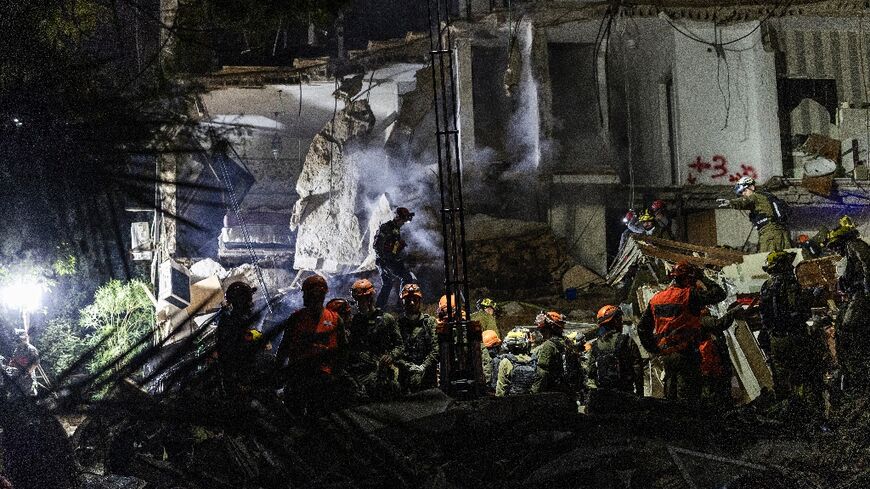
Israel's Prime Minister Benjamin Netanyahu at the site of a missile strike near Tel Aviv