Analysis-Trump's summit delay casts pall over US-China trade truce

By Antoni Slodkowski

BEIJING, March 17 (Reuters) - U.S. President Donald Trump's request to delay the planned summit in Beijing with Chinese leader Xi Jinping casts a shadow over mutual ties that have been stable since their last meeting in October, but is unlikely to cause a major setback, analysts said.

Trump's move shows how the Iran conflict has upended his foreign policy agenda and added war to trade and Taiwan among the spectrum of issues separating the world's two biggest economies.

U.S. President Donald Trump and Chinese President Xi Jinping walk as they leave after a bilateral meeting at Gimhae International Airport, on the sidelines of the Asia-Pacific Economic Cooperation (APEC) summit, in Busan, South Korea, October 30, 2025. REUTERS/Evelyn Hockstein

Ukraine's Zelenskiy to meet Starmer in London, to boost drone partnership

March 17 (Reuters) - Ukrainian President Volodymyr Zelenskiy is due to meet Prime Minister Keir Starmer in London on Tuesday to agree a deeper defence and industrial partnership, the British government said.

The two leaders are expected to agree on anexpanded declaration aimed at joint production and supply of drones and other military technologies, Downing Street said in a statement.

Britain and Ukraine will also look at opportunities for increased defence industrial and technological cooperation with other countries, the statement added.

FILE PHOTO: British Prime Minister Keir Starmer greets Ukrainian President Volodymyr Zelenskiy at 10 Downing Street, as E3 partners France, Germany and Britain meet in London, Britain, December 8, 2025. REUTERS/Isabel Infantes/File Photo

'It was like doomsday,' says Kabul hospital survivor after Pakistan air strike

By Mohammad Yunus Yawar

KABUL, March 17 (Reuters) - Ahmad, 50, watched flames engulf his friends at a drug rehabilitation centre in Kabul where he was undergoing treatment, unable to save them as they cried for help after a Pakistani air strike, leaving a scene he said resembled "doomsday".

The Afghan Taliban government says at least 400 people were killed and 250 injured in the Monday night attack, but Islamabad denied having targeted any such facility, saying it had struck military installations and "terrorist support infrastructure".

Debris lies on the ground following what the Afghan Taliban government says is an air strike by Pakistan on a drug users rehabilitation hospital in Kabul, Afghanistan, March 16, 2026 in this still image taken from video.   Tolo News Handout via X/Handout via REUTERS

Strikes shake Tehran as Trump presses allies to help in Mideast war

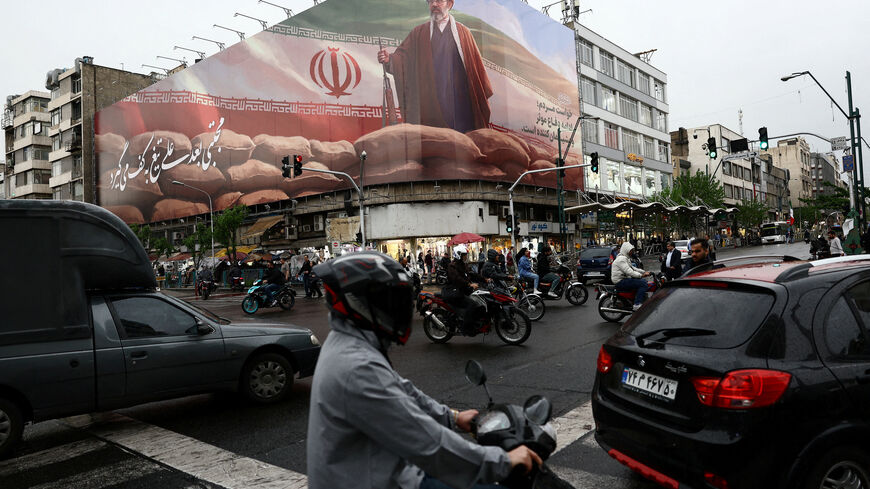
Loud explosions shook Tehran Tuesday after a night of bombing, as US President Donald Trump pressed allies to help in the war that has engulfed the Middle East and sparked global economic turmoil.

Oil prices rose more than five percent Tuesday after several countries pushed back on Trump's demand they help protect shipping in the Strait of Hormuz, a waterway that is key to the transit of crude and liquefied natural gas.

An Iranian woman walks through the destroyed kitchen in a home following a military strike in the Iranian capital Tehran on March 15, 2026

Explainer-From sponsor to enemy: What's behind Pakistan's attack on Afghan Taliban?

ISLAMABAD, March 17 (Reuters) - Pakistan has been the Afghan Taliban's closest friend for decades. It was Islamabad that helped give birth to the Taliban in the early 1990s – as a way to give Pakistan "strategic depth" in its rivalry with India. What's gone wrong?

On Monday night, Pakistan carried out an air strike on Afghan capital Kabul, the latest attack in fighting between the neighbours that has flared in recent weeks.

A man walks through debris lying in a ward of a drug users rehabilitation hospital destroyed in what the Taliban said was a Pakistani air strike in Kabul, Afghanistan, March 17, 2026. REUTERS/Yunus Yawar

Trump criticises allies over rejection of Hormuz request, as Iran and Israel trade airstrikes

By Alexander Cornwell and Jonathan Landay

March 17 (Reuters) - U.S. President Donald Trump accused some Western allies of ingratitude after several countries rebuffed his demand to send warships to escort oil tankers through the Strait of Hormuz, as Iran continued to target oil facilities in the Gulf.

The U.S.-Israeli war on Iran is in its third week with no end in sight. The critical Strait of Hormuz, through which 20% of the world's oil and liquefied natural gas flow, remains largely closed off, raising energy prices and fears of inflation.

A man carries a dog as emergency personnel work at the site of a strike on a residential building, amid the U.S.-Israeli conflict with Iran, in Tehran, Iran, March 16, 2026. Majid Asgaripour/WANA (West Asia News Agency) via REUTERS

Iran 'negotiating' with FIFA over moving World Cup games to Mexico: embassy

Iran's football federation is "negotiating" with FIFA to relocate the country's first-round matches at the World Cup to Mexico from the United States, citing the conflict in the Middle East, Iran's embassy in Mexico said Monday.

Iran's participation at this summer's finals in the United States, Canada and Mexico has been thrown into doubt since the war began late last month.

 Mexico is co-hosting the biggest World Cup in history, along with the United States and Canada, from June 11 to July 19, 2026

Middle East war: global economic fallout

Here are the latest economic events in the Middle East war:

- Crude back up -

Crude prices were flat to higher on Friday, while stocks slid lower.

Around 1430 GMT Brent crude was flat at $108.70 a barrel while West Texas Intermediate rose 0.4 percent to $95.95.

- Kuwait refinery ablaze -

Firefighters battled a blaze at a giant oil refinery in Kuwait after a fresh drone attack, as Iran kept up a wave of strikes on its neighbours and vowed there was "no concern" about its missile production.

Oil and gas markets have reeled with the war in the Middle East

Hong Kong to see oil shocks and volatility from Middle East war

HONG KONG, March 17 (Reuters) - Hong Kong's leader John Lee said he was "very concerned" about the rise in oil prices due to the U.S.-Israeli war on Iran and that the financial hub, along with the rest of Asia, would see shocks and volatility due to the disruption of supply and oil prices.

Lee, speaking at a press conference on Tuesday, said the government was working to ensure stable energy supplies and would increase transparency of information related to supply and energy prices.

Chief Executive of Hong Kong John Lee speaks during a press conference in Beijing, China December 16, 2025. REUTERS/Tingshu Wang

Trump was warned of likely Iranian retaliation on Gulf allies, sources say

By Jonathan Landay, Phil Stewart and Erin Banco

WASHINGTON, March 16 (Reuters) - President Donald Trump was warned that attacking Iran could trigger retaliation against U.S. Gulf allies despite his claims on Monday that Tehran's reaction came as a surprise, said a U.S. official and two sources familiar with U.S. intelligence reports.

Pre-war intelligence assessments did not say that Iran’s response was "a guarantee, but it certainly was on the list of potential outcomes," said one source, who like the other two requested anonymity to discuss the issue.

U.S. President Donald Trump listens to a question from a reporter during an event to sign an executive order creating an anti‑fraud task force headed by U.S. Vice President JD Vance in the Oval Office at the White House in Washington, D.C., U.S., March 16, 2026. REUTERS/Jonathan Ernst