Aggressive Trump launches Latin America cartel coalition

By Nandita Bose, Sarah Morland and David Brunnstrom

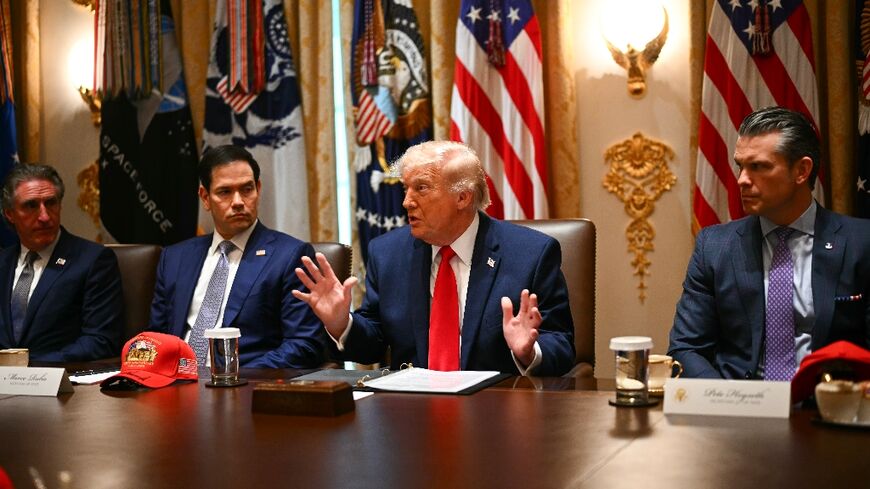
MIAMI, Florida, March 7 (Reuters) - U.S. President Donald Trump welcomed Latin American leaders to Florida on Saturday to launch a new coalition against drug cartels, even as he struck a dismissive tone toward the region, telling officials their countries had allowed gangs to seize territory and joking that he had no time to learn their languages.

Kristi Noem attends the "Shield of the Americas" Summit in Miami, Florida, U.S., March 7, 2026. REUTERS/Kevin Lamarque

Israeli settler fatally shoots Palestinian in West Bank, health ministry says

RAMALLAH, West Bank, March 7 (Reuters) - An Israeli settler shot dead a 27-year-old Palestinian man in the occupied West Bank on Saturday, the Palestinian Health Ministry said.

The man was killed in the village area of Masafer Yatta, near the Palestinian city of Hebron, according to the Health Ministry and the official Palestinian news agency WAFA.

The Israeli military said the shooter was a reserve soldier who arrived at the scene after receiving a report of confrontations between settlers and Palestinians. The incident was being investigated, the military said.

Demolished structures are seen in Khallit al-Dabe in Masafer Yatta near Hebron in the Israeli-occupied West Bank, November 4, 2025. REUTERS/Mussa Qawasma

Iran apologises to Gulf but war still rages across region

By Maya Gebeily, Humeyra Pamuk and Alexander Cornwell

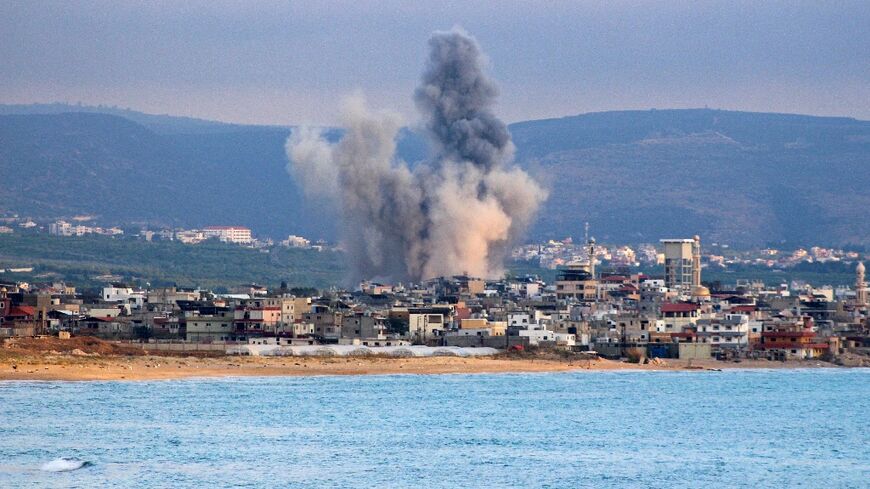
BEIRUT/WASHINGTON/TEL AVIV, March 7 (Reuters) - Israel and Iran traded attacks as the Middle East war entered a second week on Saturday, while Tehran made an unusual apology to neighbouring states, apparently seeking to calm regional anger at Iranian strikes on Gulf civilian targets.

"I personally apologise to neighbouring countries that were affected by Iran’s actions,” Iranian President Masoud Pezeshkian said, urging them not to join U.S.-Israeli attacks on Iran.

A person looks up as a USAF B1-B bomber prepares to land at RAF Fairford airbase, which also hosts United States Air Force (USAF) personnel, amid the U.S.–Israeli conflict with Iran, in Fairford, Britain, March 6, 2026. REUTERS/Toby Melville

Iranian hardline clerics seek swift naming of new supreme leader

DUBAI, March 7 (Reuters) - Hardline clerics have called for the swift selection of a new supreme leader to help guide Iran, Iranian media reported on Saturday, as the Islamic Republic reels under a new wave of U.S. and Israeli strikes.

The calls suggest some in the clerical establishment may be uncomfortable leaving power in the hands of the three-man council put in charge temporarily after the killing of Supreme Leader Ayatollah Ali Khamenei, who had the final say in all matters of state.

A demonstrator holds an image of Iran's late Supreme Leader Ayatollah Ali Khamenei, after he was killed in Israeli and U.S. strikes on Saturday, during an anti-Israeli and U.S. rally after Friday prayer, amid the U.S.-Israeli conflict with Iran, in Tehran, Iran, March 6, 2026. Majid Asgaripour/WANA (West Asia News Agency) via REUTERS

Protests across globe mark one week of Iran war

Lion-emblazoned flags of pre-revolution Iran fluttered in cities across the world on Saturday as demonstrators took to the streets a week after the start of the war in the Middle East.

Europe, Africa and the Americas saw demonstrations, with some protesting against Iran's Islamic regime, others railing against the war, and some in support of Iran's late supreme leader Ali Khamenei, who was killed in the first US-Israeli strikes of the conflict.

Many protesters came out in support of Reza Pahlavi, the son of the late shah overthrown in Iran's 1979 revolution

Refugees, migrants in Lebanon find rare sanctuary from Israeli strikes in Beirut church

BEIRUT, March 7 (Reuters) - When Israeli strikes began pummelling Beirut’s southern suburbs early on Monday, Sudanese refugee Ridina Muhammad and her family had no choice but to flee home on foot, eventually reaching the only shelter that would accept them: a church.

Eight months pregnant, Muhammad, 32, walked with her husband and three children for hours in the dark streets until they found a car to take them to the St. Joseph Tabaris Parish, which has opened its doors to refugees and migrants.

Mattresses in a pile, as refugees and displaced migrant workers shelter in St. Joseph Church, following an escalation between Hezbollah and Israel amid the U.S.-Israeli conflict with Iran, in Beirut, Lebanon, March 6, 2026. REUTERS/Claudia Greco

Stranded by war, Doha's cruise passengers hit the road for flights home

Two attack helicopters, their forward-facing guns silhouetted against Doha's clear blue sky, flew low over the city's cruise ship terminal as stranded passengers boarded buses and cars on Saturday for Riyadh, hoping to catch flights home.

"Eight days we are here in Doha and it's enough. We want to go home," Meral, 47, who lives near Dusseldorf told AFP as she and her partner Hussein, 52, wheeled their bags to a waiting private car to speed them to Saudi Arabia.

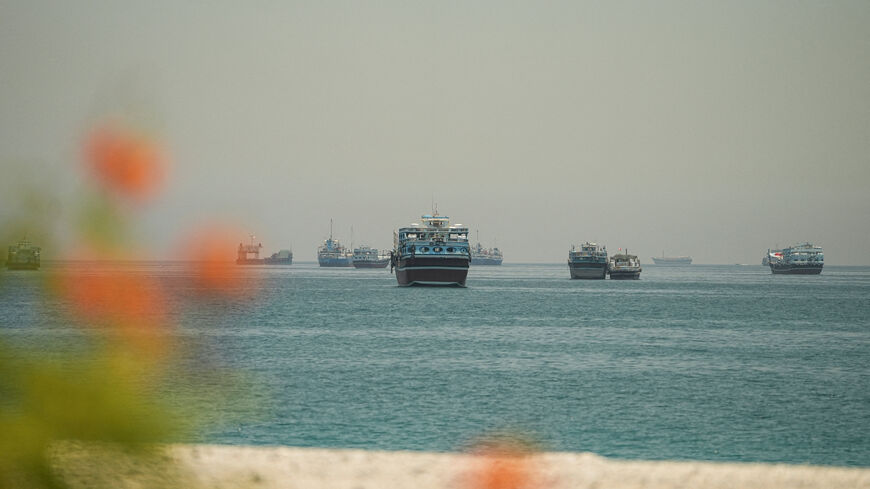
The war has spread to the otherwise stable Gulf, shutting shipping lanes, grounding flights and stranding travellers

Tehran residents keep up semblance of normality amid destruction

For a moment Tehran resembled a city at peace, with birdsong, joggers and tranquil views of the snow-capped Alborz mountains in the distance. Then the sound of another explosion ripped through the air.

A week ago, opening strikes by the US and Israel killed Iran's supreme leader Ayatollah Ali Khamenei, upended residents' lives and transformed the city streets into a battleground.

In Tehran's west, a block that belonged to the security forces had been blasted apart, and the entire surrounding area was choked with rubble.

Residents of the Iranian capital were trying to go about their lives despite the war

UAE president says country is well and is no easy prey in first public comments since Iran strikes

DUBAI, March 7 (Reuters) - The president of the United Arab Emirates said his nation was in a time of war but was well and told his enemies it was no easy prey, in his first public comments since Iran launched missiles at its Gulf neighbour amid U.S.-Israeli strikes.

"The UAE has thick skin and bitter flesh - we are no easy prey," Mohammed bin Zayed Al Nahyan, who is also ruler of Abu Dhabi, said in comments, made on Friday when visiting those injured in strikes, aired on Abu Dhabi TV on Saturday.

President of the United Arab Emirates Sheikh Mohamed bin Zayed Al Nahyan meets an injured patient receiving treatment at a hospital in Abu Dhabi, United Arab Emirates, March 6, 2026. Abdulla Al Bedwawi/UAE Presidential Court/Handout via REUTERS