Iranian president says in letter that Iran harbors no enmity towards ordinary Americans

April 1 (Reuters) - Iranian President Masoud Pezeshkian said in a letter addressed to the American people that his country harbors no enmity towards ordinary Americans, Press TV reported on Wednesday.

He said in his letter that portraying Iran as a threat was "neither consistent with historical reality nor with present-day observable facts."

(Reporting by Menna Alaa El-Din; Editing by Chris Reese)

Iranian President Masoud Pezeshkian speaks during a visit to the shrine of the leader of Iran's 1979 Islamic Revolution, Ayatollah Ruhollah Khomeini, in southern Tehran, Iran, January 31, 2026. Iran's Presidential website/WANA (West Asia News Agency)/Handout via REUTERS

Explainer-Can Trump pull the US out of NATO?

By Patricia Zengerle

WASHINGTON, April 1 (Reuters) - President Donald Trump threatened on Wednesday to pull the United States out of NATO due to its European members' refusal to send ships to unblock the Strait of Hormuz near Iran, as he intensified his denunciations of the military alliance.

Experts say it is not clear whether Trump could act unilaterally to leave the 77-year-old trans-Atlantic coalition, even though he frequently makes major decisions without congressional approval, some of which are held up by U.S. courts.

Here's a look at the issue:

U.S. President Donald Trump leaves following a press conference at the NATO summit in The Hague, Netherlands June 25, 2025. REUTERS/Piroschka Van De Wouw

Iranians vow to 'resist until the end' at Guards naval chief's funeral

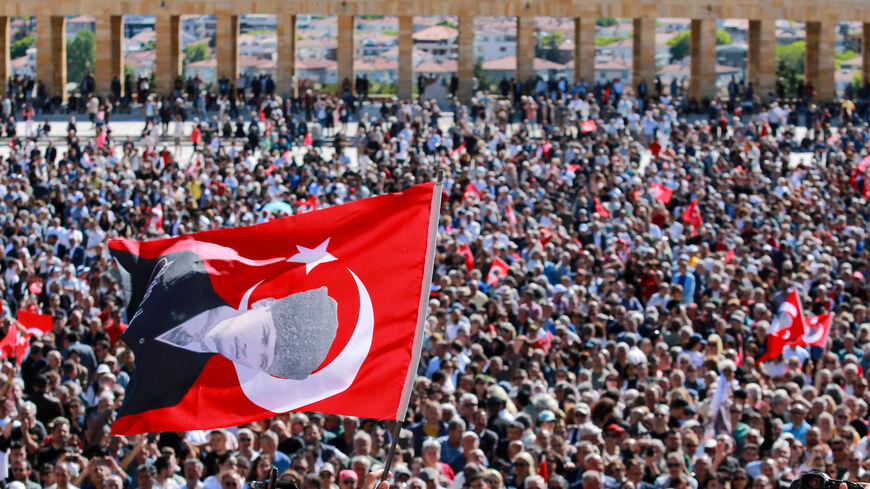
Thousands of Iranians gathered Wednesday in Tehran for the funeral of the Revolutionary Guards' naval commander, killed in an Israeli strike, with mourners vowing to fight to the end despite tough talk from Washington.

The procession took place on the 47th anniversary of the Islamic republic, proclaimed on April 1, 1979, after the revolution that overthrew the last shah and ended more than 2,500 years of monarchy.

But this year, the public holiday carried particular weight, as Tehran fights for survival under relentless US-Israeli bombardment since February 28.

Government supporters filled the symbolic Enghelab Square in the heart of the capital

IEA, IMF and World Bank to coordinate response to Middle East war's impact

By Andrea Shalal and Ruchika Khanna

April 1 (Reuters) - The heads of the International Energy Agency, International Monetary Fund, and World Bank on Wednesday said they will form a coordination group to maximize their response to the significant economic and energy impacts of the war in the Middle East.

In a joint statement, the three global bodies noted that the war had caused major disruptions in the region and triggered one of the largest supply shortages in global energy market history.

FILE PHOTO: A cargo ship in the Gulf, near the Strait of Hormuz, as seen from northern Ras al-Khaimah, near the border with Oman’s Musandam governance, amid the U.S.-Israeli conflict with Iran, in United Arab Emirates, March 11, 2026. REUTERS/Stringer/File Photo

Analysis-A war meant to break Iran could leave Tehran stronger, and Gulf exposed

By Samia Nakhoul

DUBAI, April 1 (Reuters) - If President Donald Trump ends the war with Iran without a deal, he risks leaving Tehran with a stranglehold over Middle East energy supplies and Gulf Arab oil and gas producers grappling with the fallout of a conflict they did not start or shape.

Instead of crushing Iran's theocratic rulers, it could leave them stronger, emboldened by surviving weeks of U.S.-Israeli attacks, firing on Arab Gulf states and rattling global energy markets by effectively shutting the Strait of Hormuz.

People stand near damaged buildings, amid the U.S.-Israeli conflict with Iran, in Tehran, Iran, in this still image obtained from a handout video released on April 1, 2026.    Iranian Red Crescent Society/Handout via REUTERS

Christians in Lebanon's south fear expanding war will reach their towns

By Nazih Osseiran and Maya Gebeily

April 1 (Reuters) - Thousands of Christians still living in a cluster of towns along Lebanon's southern border say they are trapped and terrified after an Israeli military advance nearby triggered the withdrawal of Lebanese troops from the area.

Residents of Rmeich, Ain Ebel and Debel had stayed in place despite Israel's mass evacuation orders for southern Lebanon, hoping their hometowns would be spared despite the expanding conflict between Israel and Lebanese armed group Hezbollah.

FILE PHOTO: Lebanese army vehicles pass by a damaged building in Naqoura, Lebanon, November 28, 2025. REUTERS/Aziz Taher/File Photo

US VP Vance spoke to intermediaries about Iran conflict as recently as Tuesday, source says

By Steve Holland

WASHINGTON, April 1 (Reuters) - U.S. Vice President JD Vance communicated with intermediaries from Pakistan about the Iran conflict as recently as Tuesday, a person briefed on the matter told Reuters, a sign of his expanding role in efforts to broker an end to the conflict.

At President Donald Trump's direction, Vance signaled privately that Trump was open to a ceasefire as long as certain U.S. demands were met, including reopening the Strait of Hormuz, the source told Reuters on Wednesday.

U.S. Vice President JD Vance delivers a speech on the day he administers the oath of office to Colin McDonald, the U.S. Assistant Attorney General in charge of fraud enforcement, in the Indian Treaty Room of the Eisenhower Executive Office Building (EEOB) on the White House campus in Washington, D.C., U.S., April 1, 2026. REUTERS/Ken Cedeno

Trump tells US that Iran war victory near, but vows big strikes

President Donald Trump insisted Wednesday that the United States was nearing victory in Iran as he laid out his case more than a month into a war that has sent his approval rating tumbling.

In an evening speech from the White House, Trump broke little new ground on how the war would end and vowed two to three weeks further of "extremely hard" strikes against Iran.

"We are going to finish the job, and we're going to finish it very fast. We're getting very close," he said in remarks that largely rehashed his daily streams of social-media postings and rapid media interviews.

US President Donald Trump speaks during a televised address on the Iran war