Islamic State group names new leader, confirms death of predecessor

The Islamic State group Thursday confirmed the death of its leader Abu Ibrahim al-Qurashi, more than a month after his demise, and named Abu Hasan al-Hashemi al-Qurashi as his successor.

Little is known about the new leader, who will serve as the jihadist group's third chief since its inception.

IS personnel have "pledged allegiance" to "Abu Hasan al-Hashemi al-Qurashi as an emir over believers and the caliph of Muslims," the group's spokesperson said in an audio recording released on its social media channels.
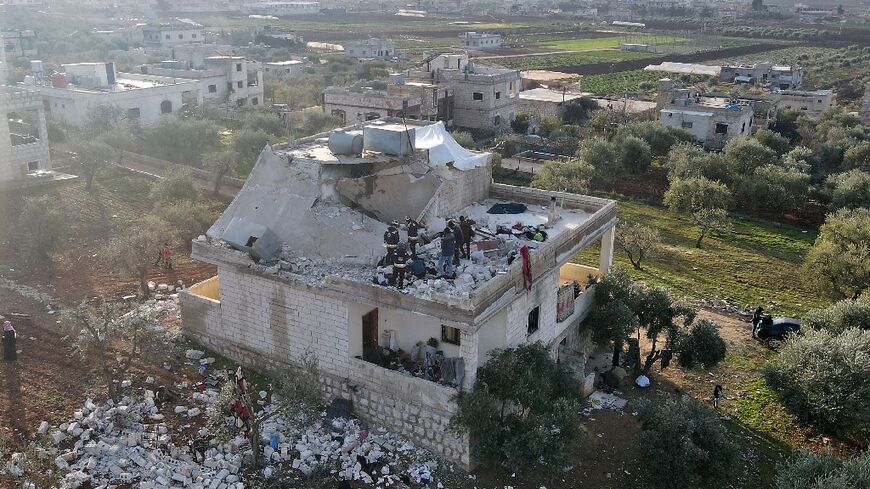
The house in which the leader of Islamic State (IS) group Abu Ibrahim al-Hashimi al-Qurashi died, during a raid by US special forces, in the town of Atme in Syria's northwestern province of Idlib

Iran says US made 'new demands' in nuclear talks

Iran said on Thursday the United States has made extra demands and accused it of working to "complicate" efforts to restore a 2015 nuclear deal, after new Russian requests linked to the Ukraine war raised concerns of fresh delays.

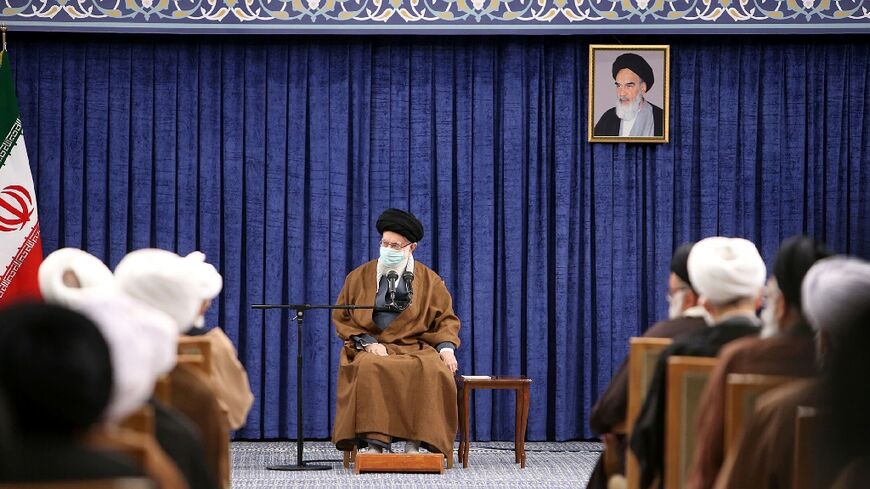
Iran's supreme leader Ayatollah Ali Khamenei, who has the final say in major state policies, meanwhile, stressed his country will not give up on elements of "national strength", such as nuclear progress and regional influence.

Iran's supreme leader Ayatollah Ali Khamenei at a meeting with members of the Assembly of Experts in Tehran

'We are enemies': Ukraine, Russia tensions at Saudi arms fair

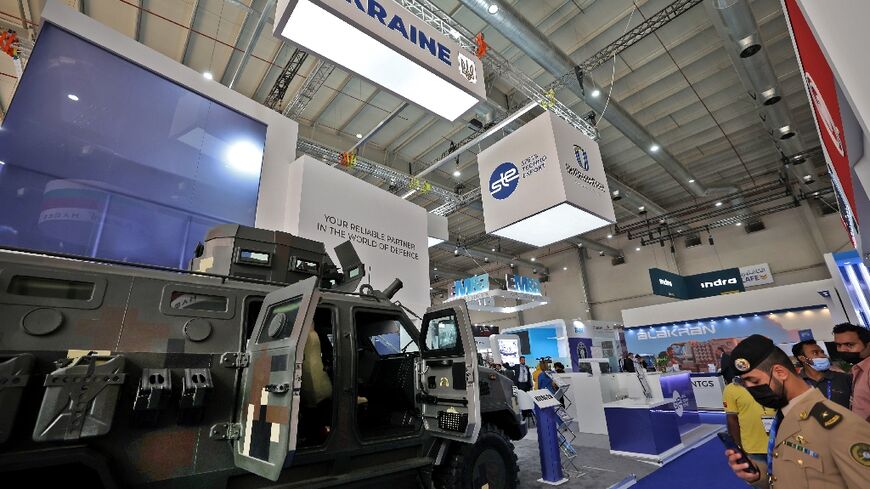
Far from the war raging thousands of miles away, Russia-Ukraine tensions were on full display at a Saudi arms fair, where staff from each country eyed each other suspiciously over their latest weaponry.

Russian military hardware at the World Defence Show in Riyadh this week far outstripped the display at the Ukrainian pavilion, where staff bristled with anger about the attack on their country.

Only two armoured vehicles were on display at the Ukrainian pavilion at the Saudi defence show

UAE investment group revives Tunisia $5bn construction scheme

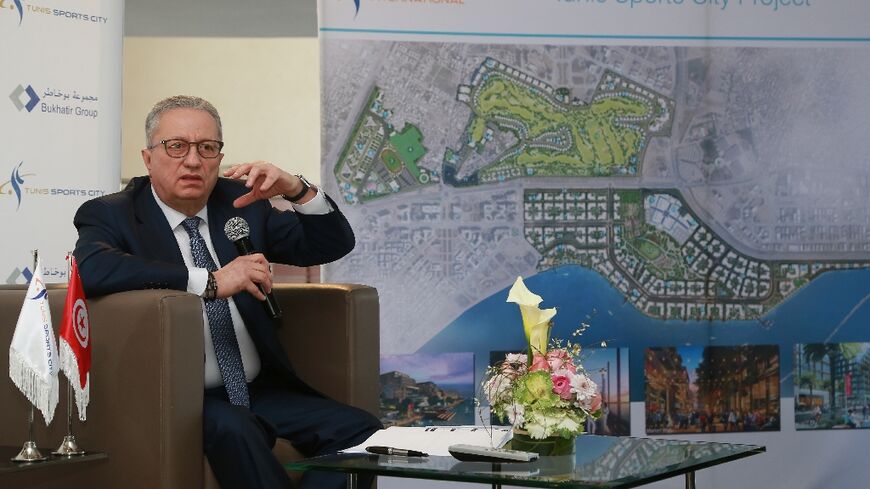
The Bukhatir Group of the United Arab Emirates announced Thursday the relaunch of a $5 billion real-estate project in Tunisia, expected to boost the North African country's struggling economy.

Known as the "Tunis Sports City," the venture has been on hold for 15 years, due in large part to the 2008 global financial crisis and Tunisia's 2011 Arab Spring protests that toppled veteran autocrat Zine El Abidine Ben Ali.

The head of the UAE's Bukhatir Group in Tunisia Afif Bejaoui announces the relaunch of a $5 billion real-estate project in the North African country

Holocaust memorial suspends ties with Chelsea's Abramovich

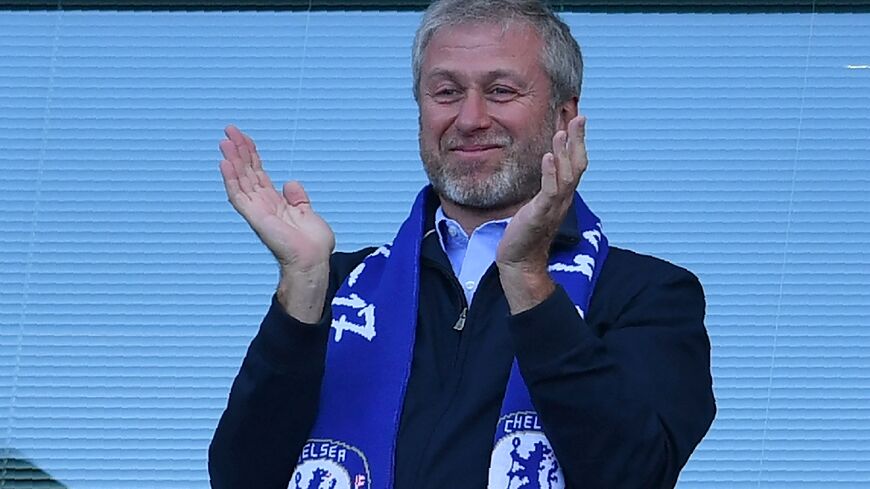
Israel's Yad Vashem Holocaust memorial announced Thursday it has suspended ties with Roman Abramovich, the Russian billionaire owner of Chelsea FC and major donor facing sanctions worldwide following the invasion of Ukraine.

"In light of recent developments, Yad Vashem has decided to suspend the strategic partnership with Mr. Roman Abramovich," spokesman Simmy Allen said in a statement.

Chelsea's Russian owner Roman Abramovich celebrates English Premier League title win in May 2017

Ukraine's Jewish ex-PM urges stronger Israeli response to Russia

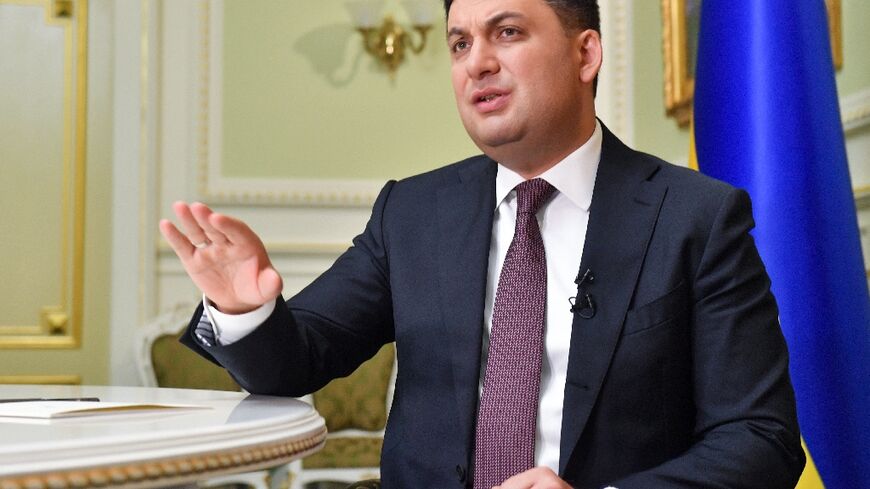
Former Ukrainian premier Volodymyr Groysman, who lost much of his family in the Holocaust, compared Russia's invasion of his country to Nazism and said the West and Israel needed to do more in response.

Groysman, who was Ukraine's first openly Jewish prime minister, was in office from 2016 to 2019.

For the brief period in 2019 when he served under President Volodymyr Zelensky, Ukraine was the only country in the world besides Israel to have a Jewish head of state and head of government.

Then Ukrainian prime minister Volodymyr Groysman speaks to a journalist in May 2018

Russia tactics in Ukraine war mirror Syria testing ground: experts

Besieging cities, shelling civilian infrastructure and arranging "safe corridors": the tactics used by Russia in its war on Ukraine mirror those it tested and fine-tuned to drain resistance in Syria's conflict.

But unlike its Syria play book, the challenge Russia faces from a Western-backed army in Ukraine dwarfs that of Syrian rebels who lacked military might or broad international backing, analysts said.

Russia entered Syria's civil war in 2015 on the side of President Bashar al-Assad's regime, allowing Damascus to clock up decisive victories in the decade-long conflict.

A banner depicting Syrian President Bashar al-Assad and Russian President Vladimir Putin and reading "Justice Prevails", is displayed along a highway in the Syrian capital Damascus, on March 8, 2022

Ukraine's Jewish ex-PM urges stronger Israeli response to Russia

Former Ukrainian premier Volodymyr Groysman, who lost much of his family in the Holocaust, compared Russia's invasion of his country to Nazism and said the West and Israel needed to do more in response.

Groysman, who was Ukraine's first openly Jewish prime minister, was in office from 2016 to 2019.

For the brief period in 2019 when he served under President Volodymyr Zelensky, Ukraine was the only country in the world besides Israel to have a Jewish head of state and head of government.

Then Ukrainian prime minister Volodymyr Groysman speaks to a journalist in May 2018

From 'puppets' to players: Ukraine war reveals shift for US's Gulf allies

Russia's invasion of Ukraine has exposed a once unthinkable divergence between Washington and key Middle East allies Saudi Arabia and the UAE, the oil giants that are increasingly independent on the international stage.

The wealthy Gulf nations, which host US forces and have dependably backed Washington for decades, have notably refrained from supporting President Joe Biden's administration as it tries to choke Moscow's lifelines, from energy to diplomacy.

Saudi Crown Prince Mohammed bin Salman (MBS) (L) and Abu Dhabi Crown Prince Mohammed bin Zayed al-Nahyan (MBZ) are close

Iran says US has 'complicated' nuclear talks

Iran on Thursday accused the United States of working to "complicate" efforts to restore a 2015 nuclear deal, after new Russian demands linked to its invasion of Ukraine raised concerns of further delays.

It came on the day Iran's supreme leader Ayatollah Ali Khamenei, who has the final say in major state policies, stressed that his country will not give up on elements of "national strength", such as nuclear progress and regional influence.

Iran's supreme leader Ayatollah Ali Khamenei at a meeting with members of the Assembly of Experts in Tehran