Israeli researchers find opium residue in 3,500-year-old pottery

Israeli archaeologists said Tuesday they had discovered opium residue in 3,500-year-old pottery pieces, providing evidence to support the theory that the drug was used in ancient burial rituals.

The joint investigation by the Israel Antiquities Authority and Weizmann Institute of Science began in 2012 when excavations in the central Israeli town of Yehud revealed a series of Late Bronze Age graves.

Researchers found pottery vessels at the site that resembled poppy flowers -- from which opium is derived -- dating back to the 14th century BC.
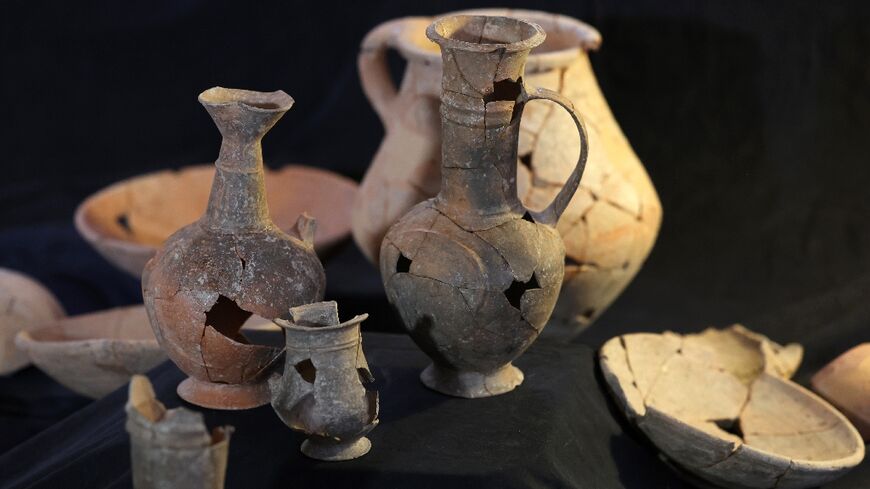
Researchers found pottery vessels that resembled poppy flowers, from which opium is derived

Palestinian Authority arrest raid sparks deadly West Bank clashes

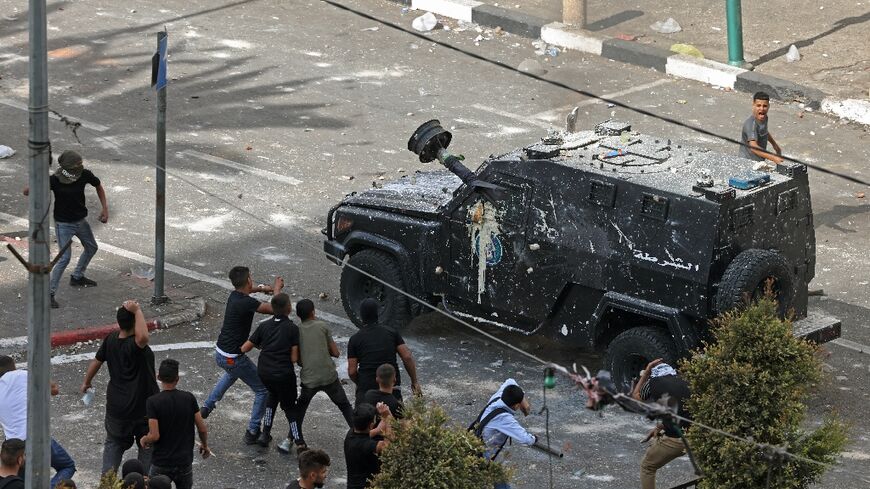
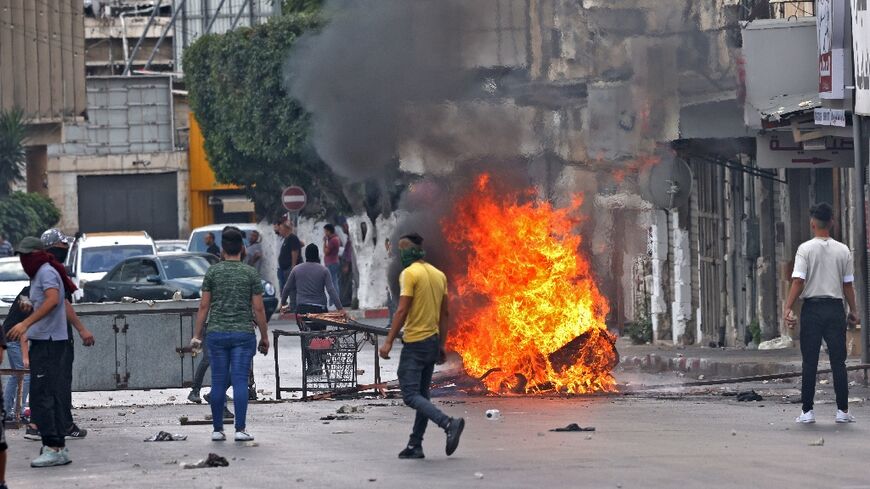
A rare operation by the Palestinian Authority security forces to arrest a Hamas member sparked clashes in the West Bank city of Nablus on Tuesday, killing one.

A statement from the security forces confirmed the death of bystander Firas Yaish and said they were "waiting for a medical report", on the circumstances of his killing.

He was killed "in a place where no security personnel were present," security spokesman Talal Dweikat said in a statement.

Palestinian protesters clash with Palestinian security forces in Nablus in the occupied West Bank on Tuesday following the arrest of two members of the Islamist group Hamas

Sensitive offshore gas field key to Israel's energy strategy

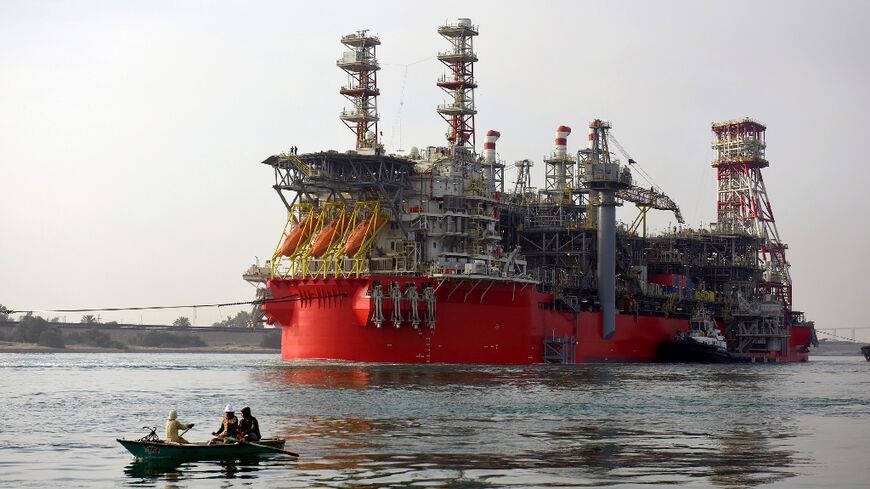
Israel is preparing to activate an offshore gas field near its disputed maritime border with Lebanon, aiming to boost energy exports to Europe but risking further tensions with its northern neighbour.

Israel and Lebanon, still technically at war, have engaged in on-off US mediated talks since 2020 to delineate their Mediterranean border, which could allow both countries to boost offshore natural gas exploration.

But the Karish gas field has emerged as a potential pitfall.

A floating production storage and offloading vessel operated by Energean Plc and set to produce gas for Israel passes through Egypt's Suez Canal in a picture dated June 5, 2022

In Iran, rare criticism of 'morality police' after Amini death

The death of 22-year-old Mahsa Amini after her arrest by Iran's "morality police" has not only triggered deadly protests but also rare outspoken criticism by top officials.

Public anger has grown since authorities on Friday announced Amini's death following her arrest by the police unit responsible for enforcing Iran's strict dress code for women, including the wearing of the headscarf covering their hair in public.

Concern mounts at 'lethal' Iran crackdown on protests

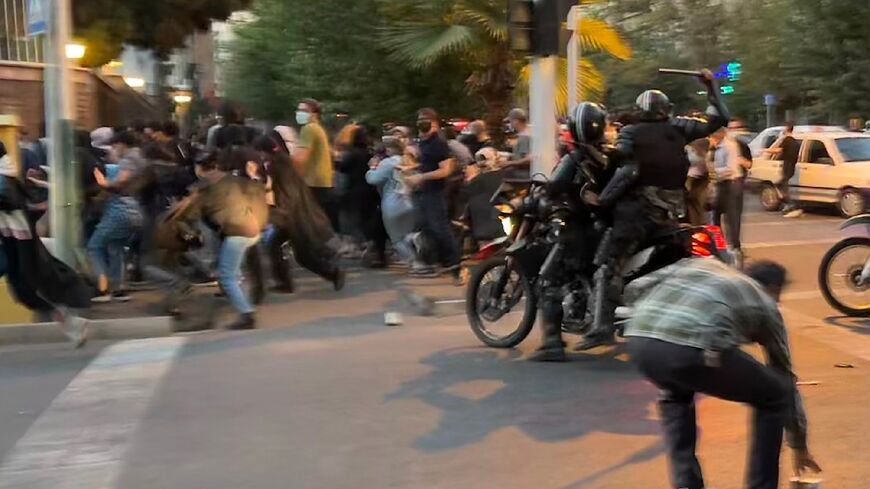
The United Nations and rights groups expressed concern Tuesday over what activists described as a lethal crackdown in Iran against protests over the death of a young woman after her arrest by Tehran's notorious morality police.

Mahsa Amini, 22, died on Friday three days after she was urgently hospitalised following her arrest by police responsible for enforcing Iran's strict dress code for women.

Activists said she suffered a blow to the head in custody but this has not been confirmed by the Iranian authorities, who have opened an investigation.

The firecest clashes so far have been in Iran's northern Kurdistan province

World Cup sponsors urged to back compensation for Qatar workers

Human rights groups urged more sponsors of the World Cup in Qatar on Tuesday to support calls for compensation for migrant workers and their families over alleged abuses.

Four of the 14 FIFA corporate partners and World Cup sponsors -- AB InBev, Adidas, Coca-Cola and McDonald's -- have stated their support for financial compensation, Human Rights Watch, Amnesty International and FairSquare said in a joint statement.

The other 10 have not publicly offered support or responded to requests to discuss "tournament-related abuses", the rights groups said.

Human rights groups are urging World Cup sponsors to push for compensation for migrant workers over alleged abuses during the construction of the tournament's infrastructure

Palestinian Authority arrest raid sparks deadly West Bank clashes

A rare operation by the Palestinian Authority security forces to arrest a Hamas member sparked clashes in the West Bank city of Nablus on Tuesday, killing one.

A statement from the security forces confirmed the death of Firas Yaish and said they were "waiting for a medical report," on the circumstances of his killing.

He was killed "in a place where no security personnel were present," forces spokesman Talal Dweikat said in a statement.

Protesters hurl stones at Palestinian security forces as they carry out an arrest operation in the main northern West Bank city of Nablus

SpaceX wants to bring satellite internet to Iran: Musk

SpaceX will apply for an exemption from US sanctions against Iran in a bid to offer its satellite internet service to the country, owner Elon Musk said on Monday.

"Starlink will apply for an exemption from sanctions against Iran," Musk said in response to a tweet from a science reporter.

Musk had initially announced that the Starlink satellite internet service had been made available on every continent -- "including Antarctica" -- with the company planning to launch up to 42,000 satellites to boost connectivity.

Elon Musk said SpaceX will ask the US government for a sanctions exemption to offer internet connectivity in Iran

Twilight of the Tigris: Iraq's mighty river drying up

It was the river that is said to have watered the biblical Garden of Eden and helped give birth to civilisation itself.

But today the Tigris is dying.

Human activity and climate change have choked its once mighty flow through Iraq, where -- with its twin river the Euphrates -- it made Mesopotamia a cradle of civilisation thousands of years ago.

Iraq may be oil-rich but the country is plagued by poverty after decades of war and by droughts and desertification.

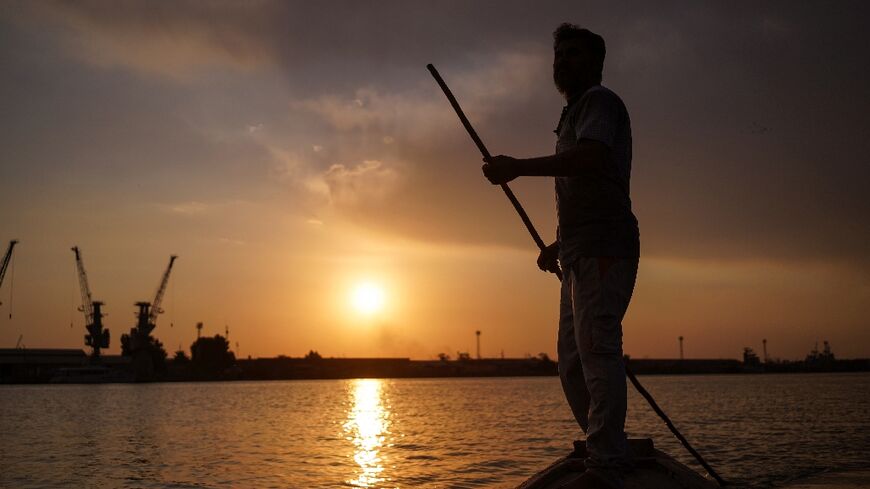
Sun setting on the Tigris: Iraqi fisherman Naim Haddad plys the Shatt al-Arab near Basra

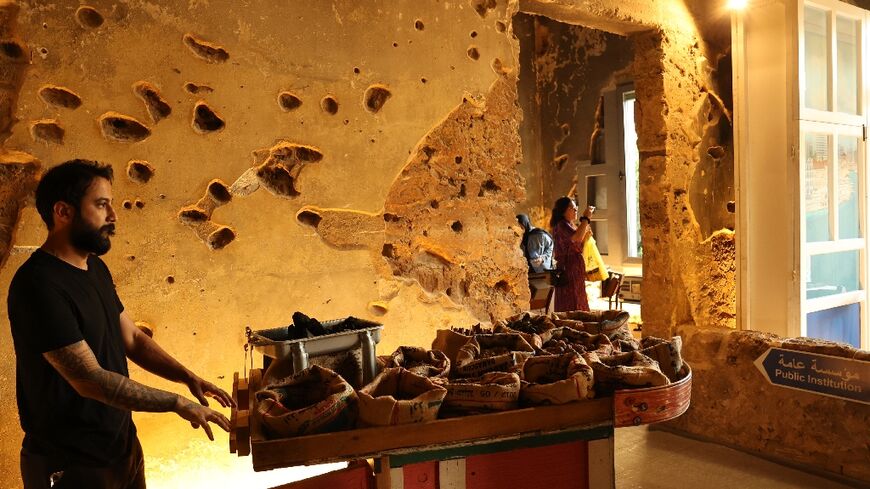
Lebanon's past echoes its grim present in exhibition

In a war-scarred Beirut heritage house turned museum, archives of Lebanon's troubled past fuse with artistic depictions of its grim present to portray a country seemingly in perpetual turmoil.

Newspaper clippings, film negatives and diary entries from the years before Lebanon's 1975-1990 civil war tell a story of government corruption, public sector strikes and student protests.

They are shown alongside contemporary pictures, video footage and art installations illustrating today's Lebanon, in the grip of political paralysis and its worst ever economic crisis.

The exhibition "Allo, Beirut?" shows archives of Lebanon's troubled past fused with artistic depictions of the grim present