What's next for Syria after Assad's regional comeback?

Syrian President Bashar al-Assad has returned to the Arab fold after more than a decade of isolation, eyeing reconstruction and aid from formers foes as the conflict grinds on.

Since the brutal civil war broke out in 2011, it has killed more than 500,000 people, displaced millions and devastated much of the country's infrastructure and industry.

AFP looks at Assad's regional rehabilitation and what it means for Syria's rebels, its refugees, reconstruction and the roaring illegal trade in the stimulant drug captagon.

- How have Arab nations mended ties? -
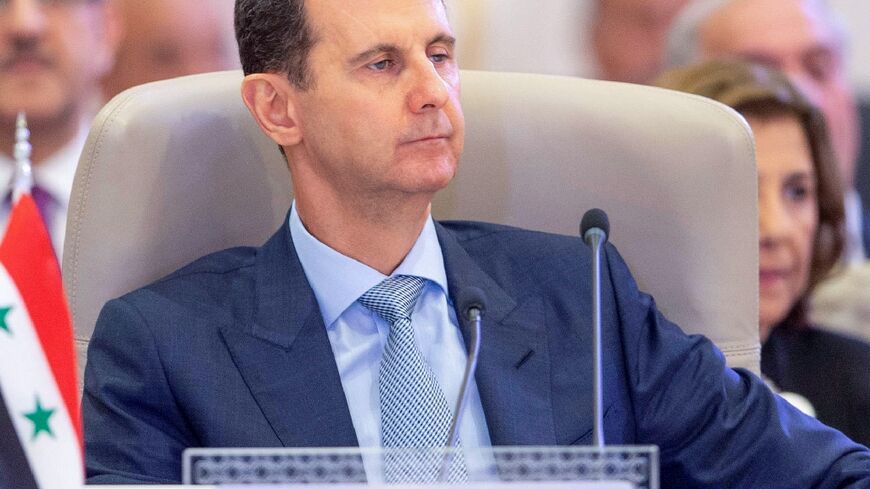
President Bashar al-Assad takes the seat of the Syrian Arab Republic at the Arab summit in Jeddah, Saudi Arabia, sealing his government's return from suspension

Tunisia protest as police question journalists

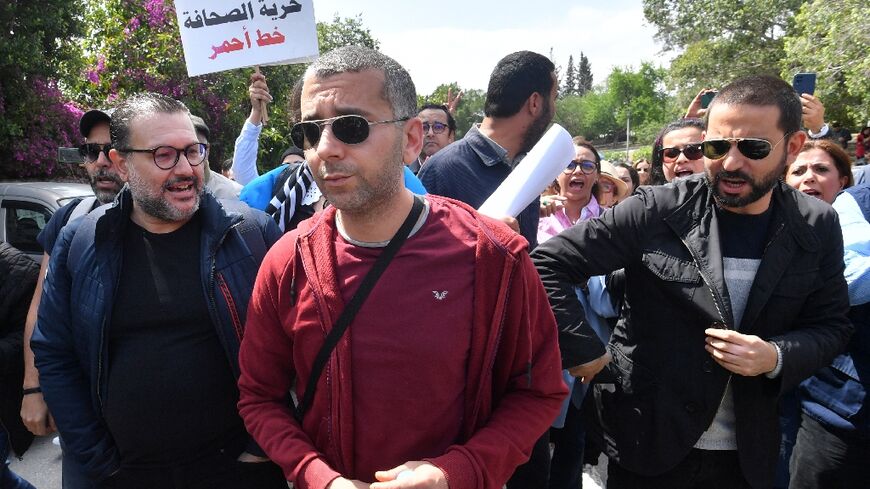
Dozens of journalists protested Monday in front of a Tunis police station after two of their colleagues had been taken for questioning over comments on Tunisia's security forces, AFP correspondents said.

Columnist Haythem El Mekki and presenter Elyes Gharbi were interrogated for several hours, after which their case has been transferred to the Tunis prosecutor's office, their lawyer Ayoub Ghdamssi told AFP.

Haythem El Mekki (C) and Elyes Gharbi (L) surrounded by protesters in Tunis

Sporadic shelling as combat eases after Sudan ceasefire

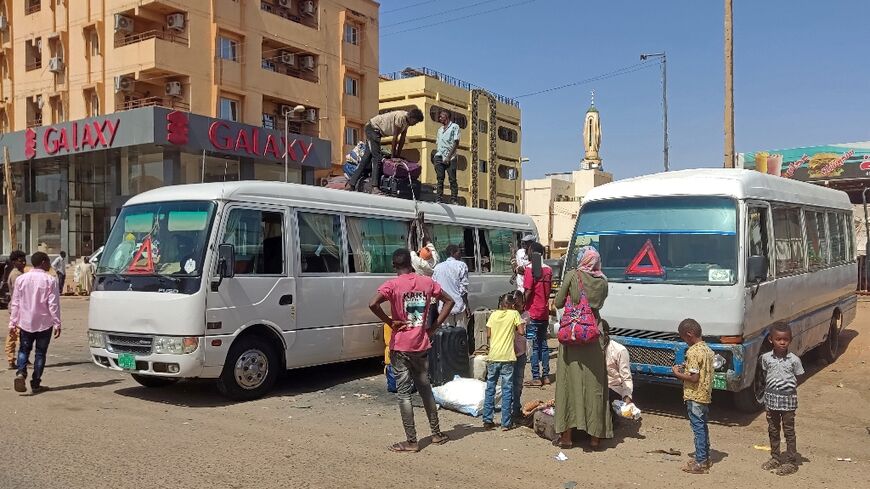
Sporadic artillery fire still echoed in Sudan's capital Tuesday but residents said fighting had calmed following a US and Saudi-brokered ceasefire, raising faint hopes in the embattled city.

In the sixth week of war, witnesses reported a relative calm had taken hold, both in greater Khartoum and in the Darfur region's cities of Nyala and El Geneina, which have been among the other main battlegrounds.

"We have not heard shelling in our neighbourhood since last night," said a witness in southern Khartoum.

The ceasefire is a chance for even more residents to flee Khartoum

Iran's Raisi replaces longtime security chief Shamkhani

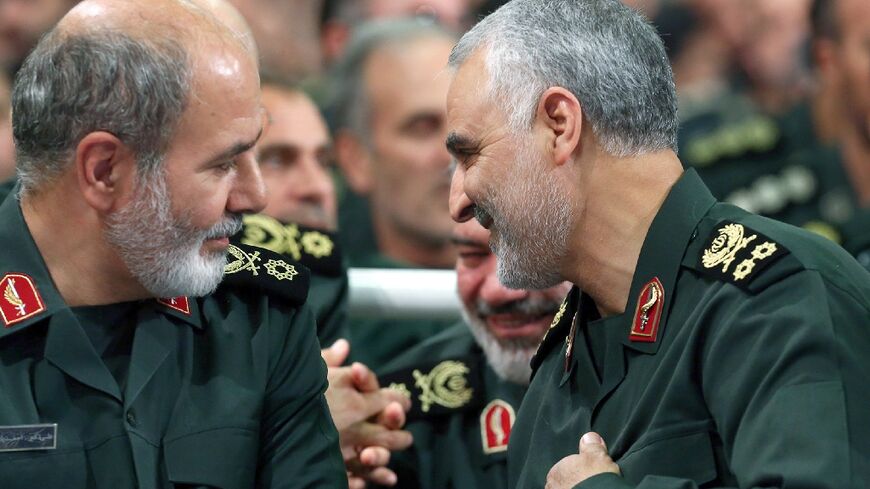
Iran's President Ebrahim Raisi on Monday appointed a Revolutionary Guards general as the country's top security official, replacing Ali Shamkhani after nearly a decade marked by headway in Gulf diplomacy.

"Ali Akbar Ahmadian was appointed as the secretary of the Supreme National Security Council by the decree of the president," the official presidential website reported.

The Islamic republic's highest security body, the council reports to supreme leader Ayatollah Ali Khamenei who has the final word on all major policy decision.

Ali Akbar Ahmadian (L) speaking with slain IRGC General Qasem Soleimani in Tehran

Israeli forces kill three Palestinians in West Bank

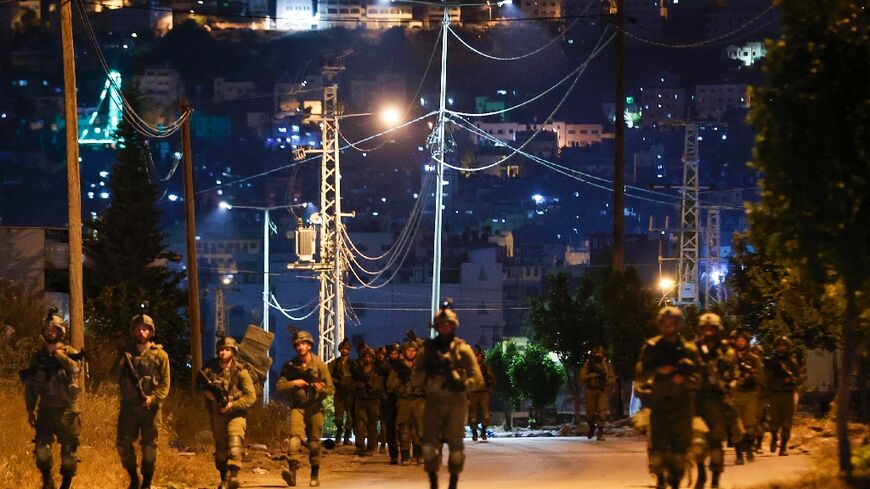
Israeli forces killed three Palestinian fighters Monday in a raid on a refugee camp in the occupied West Bank in what the army described as an operation targeting "terrorist" suspects.

In a statement, the Palestinian health ministry identified the three men killed in Balata camp in Nablus as Muhammad Abu Zaytoun, 32, Fathi Abu Rizk, 30, and Abdullah Abu Hamdan, 24.

The Al-Aqsa Martyrs' Brigades, the armed wing of Palestinian president Mahmud Abbas's Fatah party, said in a statement that the three were among the group's "fighters".

Israeli soldiers launched an overnight raid on Balata refugee camp near the occupied West Bank city of Nablus

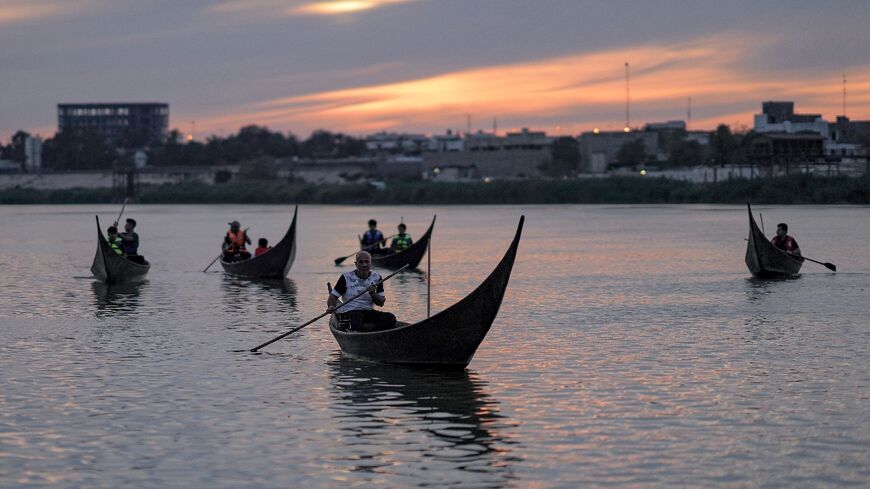
Against the stream: Iraq artist battles to save boating tradition

Young Iraqis row a flotilla of traditional wooden boats down the Tigris river in Baghdad, celebrating an ancient nautical heritage in the now drought-stricken country.

Once a common sight across Iraq's southern streams and marshlands, the elongated boats with tapered bows and sterns known as meshhouf have been around "since the time of the Sumerians", said event organiser Rashad Salim.

But the elegant water craft have long been vastly outnumbered by modern, motorised vessels and are threatened further as Iraq's waterways suffer from droughts linked to climate change.

The elongated gondola-like boats plying the Tigris river in Baghdad and known as mashhouf are part of an ancient heritage

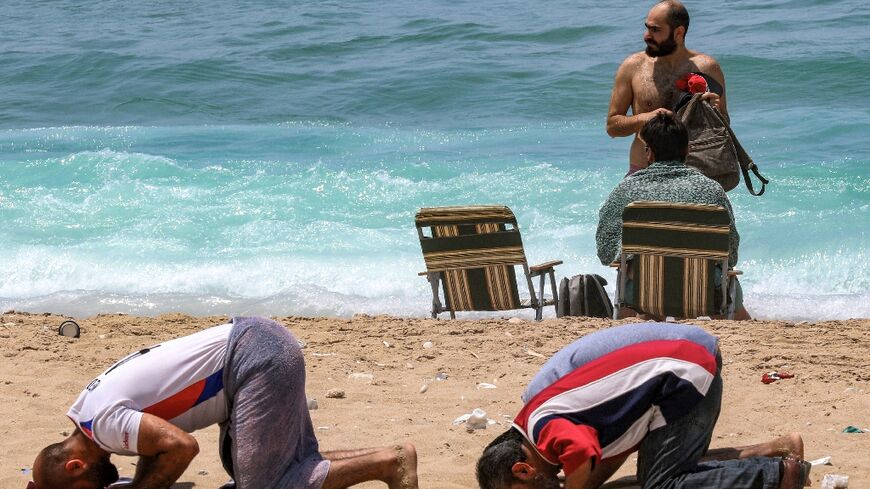
Lebanon bathing suit row triggers women-led beach protest

Lebanese activists protested Sunday at a beach in the coastal city of Sidon after a woman said she was harassed there over her allegedly indecent bathing suit, an AFP correspondent said.

Defying a municipality ban on their demonstration, dozens of protesters, mostly women, gathered briefly in the Sunni Muslim-majority conservative city, the correspondent said.

"We have all come to support women's right to be in public spaces, whether in a bikini or a burkini," said Diana Moukalled, a journalist and women's rights activist.

A group of conservative Muslims held prayers at the beach in Sidon as security forces deployed to the area

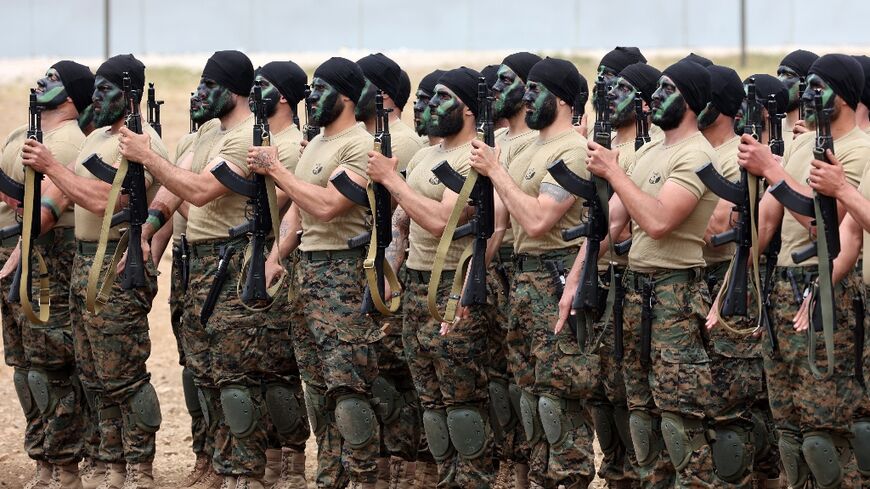
Lebanon's Hezbollah carries out mock cross-border raids into Israel

Lebanon's Hezbollah movement simulated cross-border raids into Israel Sunday in a show of its military might, using live ammunition and an attack drone, AFP correspondents said.

Around 200 Hezbollah fighters took part in the raids, part of large-scale military exercise in Aaramta, around 20 kilometres (12 miles) north of the Israeli border.

Dozens of journalists were invited to the event which took place ahead of the anniversary next week of Israel's withdrawal from southern Lebanon in 2000.

Fighters from Lebanon's Hezbollah Iran-backed militant group hold military drills in southern Lebanon including mock raids against Israel

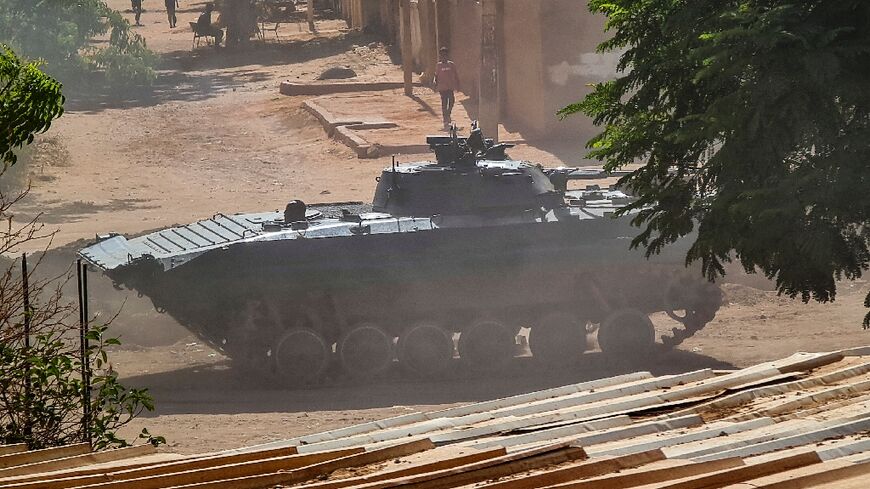
Battle-weary Sudanese hope upcoming truce finally holds

Air raids, gunfire and explosions rocked Sudan's capital on Sunday ahead of a one-week ceasefire agreed by rival generals, the latest in a series of truces that have been systematically violated.

The ceasefire is focused on enabling humanitarian assistance to civilians. It is to take effect at 9:45 pm (1945 GMT) on Monday, the United States and Saudi Arabia said in a joint statement late Saturday after talks in the Saudi city of Jeddah.

In a deserted neighbourhood of Khartoum North, Hussein Mohammed hopes that, finally, the guns will silence.

A Sudanese army armoured vehicle is stationed in southern Khartoum, after the latest ceasefire announcement

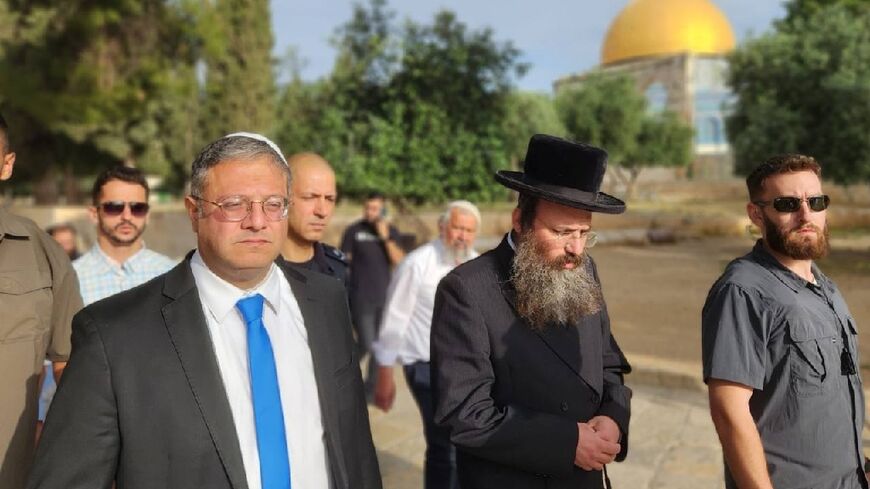
Israel far-right minister visits Al-Aqsa compound

Israel's National Security Minister Itamar Ben-Gvir visited the flashpoint Al-Aqsa mosque compound Sunday, a controversial move by the extreme-right politician amid heightened tensions in annexed east Jerusalem.

The move came three days after Ben-Gvir and tens of thousands of Jewish nationalists marched through the Old City and just over a week into a fragile Gaza ceasefire.

"Jerusalem is our soul," Ben-Gvir wrote on Telegram, alongside a photo of himself at the site in the heart of the Old City.

A controversial visit by Israel's National Security Minister Itamar Ben-Gvir to Jerusalem's Al-Aqsa Mosque compound was denounced by the Palestinians and Jordan which administers Islam's third-holiest site -- which is also the most sacred for Jews