Lebanon president says working on 'permanent agreements' after Israel truce

Lebanese President Joseph Aoun said on Friday that his country was on the verge of a "new phase" of "permanent agreements", after the 10-day ceasefire in the Israel-Hezbollah war went into force.

In a speech addressing the Lebanese people and hinting at the Iran-backed Hezbollah militant group the day after US President Donald Trump announced the truce, Aoun said that his country was no longer "an arena for anyone's wars".

President Joseph Aoun delivered a televised address to the Lebanese people from the presidential palace

Shippers eye Iran Hormuz reopening with wariness

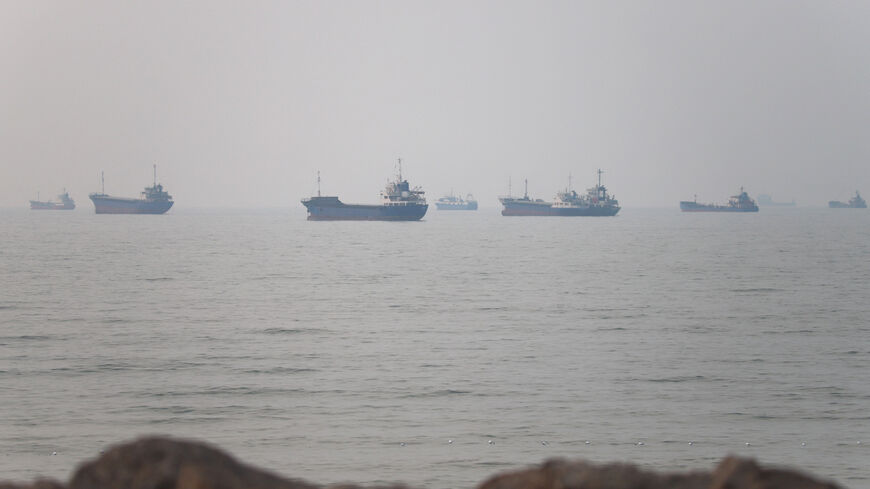
Shipping industry figures gave a cautious welcome Friday to Iran's announcement that it was reopening the crucial Strait of Hormuz trade route to commercial freight after nearly seven weeks closed.

Iranian forces' closure of the strait has trapped hundreds of ships in the Gulf and driven up the costs of shipping goods, with captains avoiding the region for fear of attacks or mines.

A spokesman for German transportation giant Hapag-Lloyd, which has ships stuck in the Gulf, told AFP by phone that the reopening was "in general... good news".

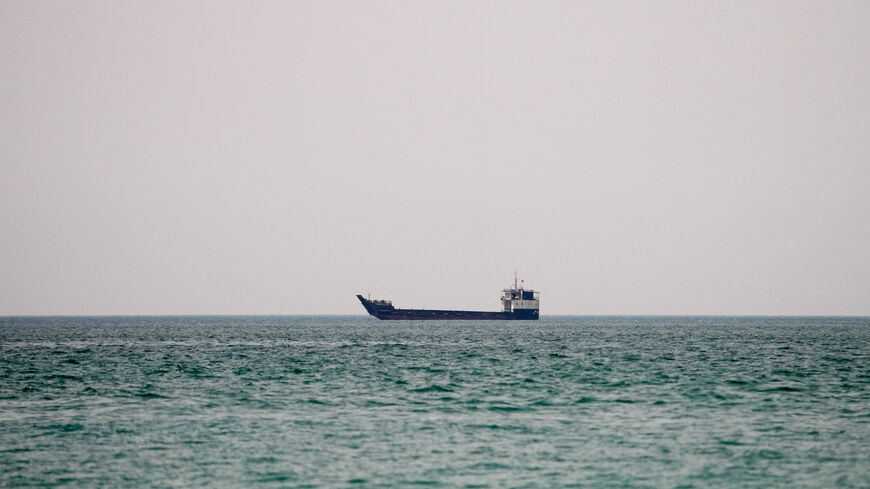
Shipping in the Strait of Hormuz has already been disrupted by the Iranian military, and some vessels now also face a US blockade

In final moments before truce, Israeli strike kills Lebanese man's family

By Thomas Suen and Louisa Gouliamaki

TYRE, Lebanon, April 17 (Reuters) - Hassan Abu Khalil's family miraculously survived six weeks of war in southern Lebanon, but tragedy struck in the final minutes before a ceasefire came into force. An Israeli strike late on Thursday killed 13 of his relatives, leaving him the sole survivor.

Abu Khalil, 36, stepped out to see friends just before midnight, when a U.S.-brokered truce between Lebanon and Israel was meant to halt fighting that had raged since March 2 between Israel and armed group Hezbollah.

FILE PHOTO: Fishermen sail their boat as smoke from an Israeli airstrike rises in Abbassiye area in Tyre, Lebanon, April 14, 2026. REUTERS/Louisa Gouliamaki/File Photo

Pro-Palestinian Tufts University graduate targeted by Trump administration returns to Turkey

By Nate Raymond

BOSTON, April 17 (Reuters) - A Tufts University graduate who had been arrested by U.S. immigration agents last year as part of the Trump administration's targeting of pro-Palestinian campus activists has returned to her home in Turkey following a settlement with the government.

Lawyers for Rumeysa Ozturk announced the accord on Friday, a week after President Donald Trump's administration fired an immigration judge who had in January rejected the U.S. Department of Homeland Security's efforts to deport her.

FILE PHOTO: Tufts University student Rumeysa Ozturk, of Turkey, speaks at a press conference at Boston Logan International Airport after she was released on a judge's order after spending over six weeks in an immigration detention center in Louisiana, in Boston, Massachusetts, U.S. May 10, 2025.  REUTERS/Faith Ninvaggi/File Photo

Lebanese joy at returning to homes in the south mixed with horror at ruins of war

By Thomas Suen , Aziz Taher , Emilie Madi and Jihed Abidellaoui

QASMIYEH, Lebanon, April 17 - Lebanese children leaned out of cars flashing victory signs on Friday as they bumped across a makeshift bridge erected overnight across the Litani River after a truce with Israel - but bombed-out ruins and hard times await.

Nearly a quarter of Lebanese have been forced from their homes, both in the south and other Shi'ite Muslim-majority areas, ordered by Israel to leave as it levelled villages and city districts and sent in troops over six weeks of war.

A man rides past a damaged building, as displaced people make their way as they return to their homes after a 10-day ceasefire between Lebanon and Israel went into effect, at the southern suburbs of Beirut, Lebanon, April 17, 2026. REUTERS/Adnan Abidi

US to recover uranium from Iran, Trump tells Reuters

WASHINGTON, April 17 (Reuters) - President Donald Trump told Reuters on Friday that the U.S. will work with Iran to recover its enriched uranium and bring it back to the United States.

"We're going to get it together. We're going to go in with Iran, at a nice leisurely pace, and go down and start excavating with big machinery... We'll bring it back to the United States," Trump said during a phone interview.

He referred to "nuclear dust" and addedthat it would be retrieved "very soon."

U.S. President Donald Trump speaks to the media, as he departs the White House for Las Vegas, Nevada, in Washington, D.C., U.S., April 16, 2026. REUTERS/Jessica Koscielniak

France, UK to lead multinational Hormuz mission

France and Britain said Friday they will lead a multinational mission ensure freedom of navigation in the Strait of Hormuz, while emphasising the force would be entirely defensive -- and only deployed once a peace in the region was agreed.

"I can confirm that, along with France, the UK will lead a multinational mission to protect freedom of navigation as soon as conditions allow," British Prime Minister Starmer said after co-chairing a meeting in Paris on the issue alongside French President Emmanuel Macron.

The UK and France would lead the mission

Mine threat in parts of Hormuz not fully understood, US navy advisory says

LONDON, April 17 (Reuters) - The threat posed by mines in parts of the Strait of Hormuz is not fully understood and avoidance of the area by ships should be considered, a U.S. navy advisory said on Friday.

"Status of TSS mine threat is not fully understood. Consider avoidance of that area," said the advisory sent by the US navy’s US NCAGS agency to mariners and seen by Reuters.

FILE PHOTO: A cargo ship in the Gulf, near the Strait of Hormuz, as seen from northern Ras al-Khaimah, near the border with Oman’s Musandam governance, amid the U.S.-Israeli conflict with Iran, in United Arab Emirates, March 11, 2026. REUTERS/Stringer/File Photo/File Photo

Ships crossing Hormuz need IRGC OK, unfreezing of assets part of deal, Iran official says

By Parisa Hafezi and Jonathan Saul

DUBAI, April 17 (Reuters) - All ships can sail through the Strait of Hormuz but this needs to be coordinated with Iran’s Islamic Revolutionary Guard Corps (IRGC), a senior Iranian official told Reuters, adding that unfreezing Iranian funds was part of the deal.

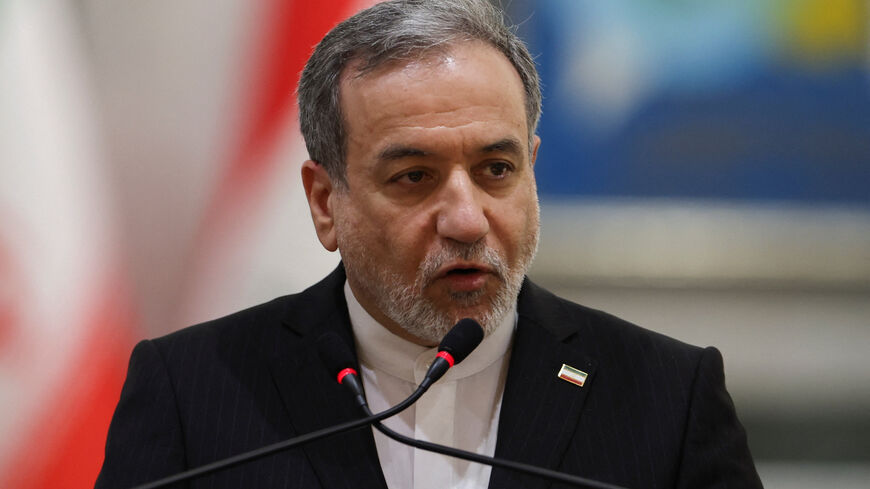
Foreign Minister Abbas Araqchi wrote on X that the strait was open after a ceasefire accord was agreed in Lebanon, while U.S. President Donald Trump said he believed a deal to end the Iran war would come "soon", although the timing remains unclear.

FILE PHOTO: Strait of Hormuz map is seen in this illustration taken April 15, 2026. REUTERS/Dado Ruvic/Illustration/File Photo

Stranded seafarers endure costly path home from Gulf

When seaman Rex Pereira saw missiles flying above his vessel in the Gulf, it sparked in him one desperate wish: to get back home to India.

Stranded by the Middle East war, like thousands of other seafarers, he feared for his life as he saw bombardments in the distance in Iran.

When he demanded to be repatriated from his supply vessel docked in Iraq, he did not expect the process would take him weeks and cost him hundreds of dollars.

Ship were blocked in the Gulf by the US-Iran war