Ukraine's Zelenskiy says Middle East visit a success, announces accords

March 30 (Reuters) - Ukrainian President Volodymyr Zelenskiy pronounced his tour of Middle Eastern countries a success on Monday and said a number of security cooperation accords had been clinched or were under discussion.

Zelenskiy embarked on a tour of the region to offer Ukrainian expertise on how to counter attacks from drones fired by Iran in its conflict with the United States and Israel, which has spread across the Middle East.

FILE PHOTO: Ukraine's President Volodymyr Zelenskiy speaks during an interview with Reuters, amid Russia's attack on Ukraine, in Kyiv, Ukraine March 25, 2026. REUTERS/Valentyn Ogirenko/File Photo

Fearing economic collapse after war, Iran cracks down on dissent

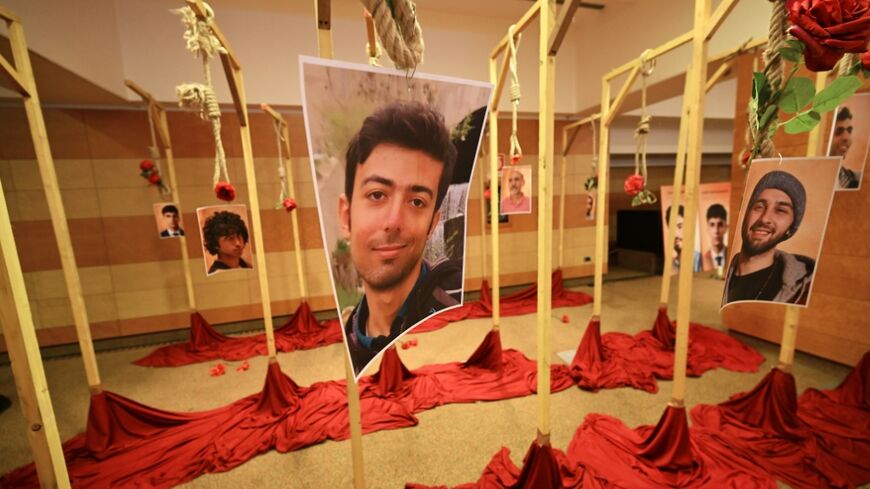
March 30 (Reuters) - A month into its war with the United States and Israel, Iran is trying to forestall any spark of domestic unrest with arrests, executions and massive street deployments by security forces and supporters, recruiting even children to staff checkpoints.

While there has been little sign so far of people defying draconian warnings not to protest, officials fear that damage to an already battered economy will spur mounting opposition to the ruling system once the conflict ends.

FILE PHOTO: The state bank building burned during Iran's protests, on a street in Tehran, Iran, January 19, 2026. Majid Asgaripour/WANA (West Asia News Agency) via REUTERS/File Photo

Trump interested in calling on Arab states to help pay for Iran war, White House says

WASHINGTON, March 30 (Reuters) - U.S. President Donald Trump would be interested in calling on Arab countries to pay for the cost of the Iran war, White House Press Secretary Karoline Leavitt told reporters on Monday, adding that she thinks Trump would have more to say on the issue.

Leavitt, asked at a news briefing whether Arab countries would step up to help pay for the war, said she would not get ahead of the Republican president but that it was an idea that Trump had.

"I think it's something the President would be quite interested in calling them to do," Leavitt said.

White House Press Secretary Karoline Leavitt speaks during a press briefing in the James S. Brady Press Briefing Room at the White House in Washington, D.C., U.S., March 30, 2026. REUTERS/Evan Vucci

UN says two peacekeepers killed in explosion in southern Lebanon

CAIRO, March 30 (Reuters) - The U.N. peacekeeping mission in Lebanon (UNIFIL) said two of its members were killed in southern Lebanon on Monday after an explosion of "unknown origin" destroyed their vehicle.

It said a third peacekeeper was severely wounded and another was also injured in the incident which took place near the Bani Haiyyan municipality.

The incident is the second in 24 hours after a UNIFIL peacekeeper was killed when a projectile exploded at one of its positions in a southern Lebanese village.

A view of Beirut's southern suburbs, following an alarm for a potential upcoming strike, amid escalating hostilities between Israel and Hezbollah, as the U.S.-Israeli conflict with Iran continues, Lebanon, March 29, 2026. REUTERS/Amr Abdallah Dalsh

UN peacekeeper killed in Lebanon as Israeli strikes pummel south

BEIRUT, March 30 (Reuters) - A United Nations peacekeeper was killed in southern Lebanon overnight, prompting condemnations on Monday after a bloody weekend in which Lebanese journalists and medics were killed in Israeli strikes.

The peacekeeper from Indonesia was the first from the U.N.'s peacekeeping force, known as UNIFIL, to be killed in the new war between Israel and Lebanese armed group Hezbollah which erupted on March 2.

Rays of sunlight break through a cloud over Beirut's southern suburbs, amid escalating hostilities between Israel and Hezbollah, as the U.S.-Israel conflict with Iran continues, Lebanon, March 30, 2026. REUTERS/Amr Abdallah Dalsh

Stock market winners and losers one month into US-Israel war on Iran

The US-Israel strikes against Iran have triggered a series of retaliations and military escalation in the Middle East that have sent shockwaves through global financial markets.

The conflict, now more than a month old, has disrupted trade and energy markets, with stocks around the globe facing diverging effects based on how exposed they are -- or how much they benefit from -- the chaos.

Here are some of the winners and losers from the conflict so far.

- Attracting investors: Oil and gas -

Performance of oil and selected indexes

Thousands of US Army paratroopers arrive in Middle East as buildup intensifies

By Idrees Ali and Phil Stewart

WASHINGTON, March 30 (Reuters) - Thousands of soldiers from the U.S. Army's elite 82nd Airborne Division have started arriving in the Middle East, two U.S. officials told Reuters on Monday, as President Donald Trump weighs his next steps in the war against Iran.

Reuters first reported on March 18 that Trump's administration was considering deploying thousands of additional U.S. troops to the Middle East, a move that would expand options to include the deployment of forces ​inside Iranian territory.

FILE PHOTO: Two F/A-18 Super Hornets launch from the flight deck of the U.S. Navy Nimitz-class aircraft carrier USS Abraham Lincoln in support of the Operation Epic Fury attack on Iran from an undisclosed location March 3, 2026. U.S. Navy/Handout via REUTERS/File Photo

What could Trump achieve by threatening Iran's Kharg Island?

A scrubby island in the Gulf that is roughly one third the size of Manhattan, Kharg Island is the nerve centre of the Iranian oil industry -- and at the heart of US President Donald Trump's latest efforts to pressure Tehran.

On Monday Trump vowed that a failure by Iran to agree a deal to end the war could see the United States "completely obliterating" the export hub.

A day earlier, he had said the United States could take the island, eyed by the Pentagon for ground operations, "very easily".

Some 90 percent of Iran's crude exports pass through Kharg Island, making it a potentially crucial pressure point for Tehran

Iran war is dimming outlook for many economies, IMF says

By Andrea Shalal

WASHINGTON, March 30 (Reuters) - The war in the Middle East has caused serious disruption to the economies of frontline countries, and is dimming the outlook for many economies that had just started to recover from previous crises, the International Monetary Fund warned on Monday.

In a blog published by the global lender's top economists, the IMF said the war launched by U.S. and Israeli strikes against Iran on February 28 was causing a global, but asymmetric shock and leading to tighter financial conditions.

People inspect damage to a residential building after it was hit by a strike, amid the U.S.-Israeli conflict with Iran, in Tehran, Iran, March 30, 2026. Majid Asgaripour/WANA (West Asia News Agency) via REUTERS