



Hormuz traffic slumps as US, Iran trade strikes
Traffic through the Strait of Hormuz has fallen sharply since Wednesday, especially through the UN-backed Omani route, analysts said, after vessels were attacked earlier this week and as the United States and Iran traded renewed strikes. The southern Omani route, used in past weeks by many vessels not linked to Iran, has been largely avoided since Wednesday.


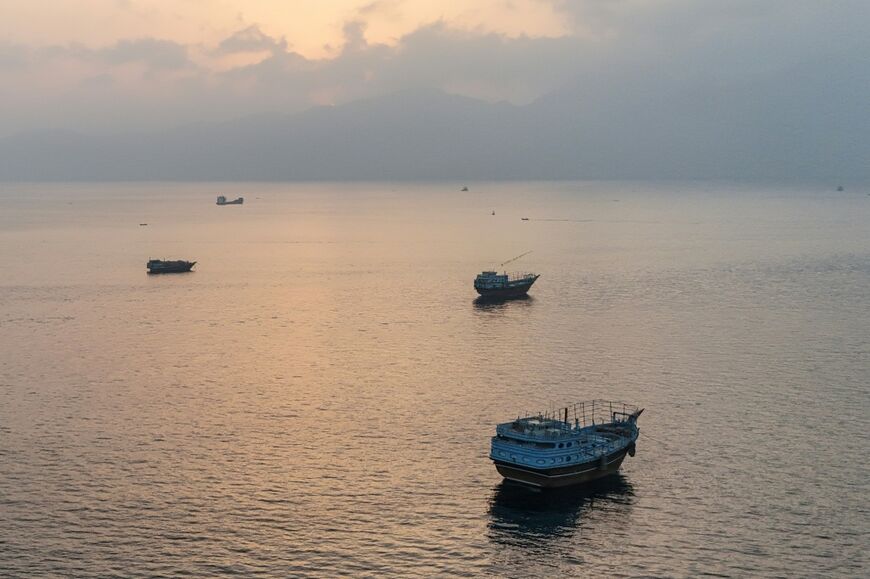
Traffic through the Strait of Hormuz has fallen sharply since Wednesday, especially through the UN-backed Omani route, analysts said, after vessels were attacked earlier this week and as the United States and Iran traded renewed strikes.
Flows through the strategic waterway reached their highest levels since the start of the war after a truce was agreed between the two sides in mid-June, although they remained at around a third of peacetime levels.
However, the recovery appears to have stalled -- just six commodity tankers have crossed so far on Thursday, and 21 such vessels transited the waterway on Wednesday, according to Kpler data as of 1430 GMT.
The only day with less traffic since the US-Iran truce was on June 28, when just 19 commodities vessels crossed a day after a tanker was attacked off Oman.
US President Donald Trump declared the ceasefire over on Wednesday but left the door open to more talks, and analysts said that the path to lasting peace was never going to be straightforward.
"Ebbs and flows, that's what I'm expecting, not just over the summer, but almost until the end of the year, until we get something concrete between Tehran and Washington," Andrew Wilson, head of research at BRS shipbrokers, said in a webinar held by maritime journal Lloyd's List on Thursday.
"We're certainly better than we were in March and April, but until we have some sort of substantial agreement..., it's just going to remain very, very volatile," he added.
- Stranded seafarers -
Most ships crossing since Wednesday either switched off their transponders or used the northern Iranian route, which requires Iranian approval to transit.
The southern Omani route, used in past weeks by many vessels not linked to Iran, has been largely avoided since Wednesday.
So far on Thursday, no ships had crossed using that route, according to ship tracks visible on MarineTraffic.
The website only shows vessels with transponders switched on, so it is possible that more may have crossed with their signals switched off.
Iran has said it opposes the route and two of the three vessels it attacked between Monday and Tuesday were near it when they were hit.
In total, five ships have been attacked since the memorandum of understanding was signed by Washington and Tehran.
The head of the International Maritime Organization (IMO), Arsenio Dominguez, urged shipowners and operators on Wednesday to avoid exposing 6,000 seafarers still stranded in the Gulf to unnecessary danger by transiting the strait.
"We're not going back to February 27, and I think everybody understands that," Lloyd's List editor-in-chief Richard Meade said in Thursday's briefing.
"A tentative 60-day agreement with few guarantees was never really going to change the dial much in terms of shipping decisions", he added.
Some tankers in recent days have also been seen reversing course as they were about to exit the strait.
The recent easing of restrictions at least allowed many vessels trapped for months in the Gulf to exit.
Shipping analysts AXSMarine said Thursday that it detected 689 merchant vessels west of the Strait of Hormuz, down from 1,061 vessels in early March.
lmc-jwp/pa/phz
This one's on us.
The story doesn't end here.
Our correspondents are already on the next chapter. Read everything they file, from $2/week.
See Offers