Three crew 'believed trapped' aboard Thai ship attacked in Gulf: firm

Three crew members believed to be trapped aboard a Thai bulk carrier hit by projectiles while travelling through the crucial Strait of Hormuz were yet to be rescued on Thursday, the vessel's owner said.

Iran's Revolutionary Guards said Wednesday they had struck the Thai-registered Mayuree Naree, as well as a Liberia-flagged vessel, in the strait because the ships had ignored "warnings".

The Thai ship was struck Wednesday morning while transiting through the Gulf waterway, after departing Khalifa port in the United Arab Emirates.

Thailand's Navy said a Thai ship was attacked in the Hormuz Strait

Fear, boredom for Philippine sailors stuck in Hormuz strait

Filipino sailor George Miranda was racing to help a stricken vessel aboard the tugboat Mussafah 2 when he last spoke to his wife and young daughter.

The 46-year-old, whose small ship was struck by a pair of missiles this week in the Strait of Hormuz, is the only seafarer from the Philippines known to be missing in the Middle East war, the government says.

A tanker passes through the Strait of Hormuz, a key energy transport route, on February 25, 2026

Trump and Iran signal no quick end to war as tankers burn in Iraqi waters

By Parisa Hafezi, Alexander Cornwell and Bo Erickson

DUBAI/TEL AVIV/WASHINGTON, March 12 (Reuters) - The United States and Iran have signaled no quick end to their war, with U.S. President Donald Trump saying it was necessary to finish the job and Iran warning that the world should be ready for oil at $200 a barrel after striking tankers in Iraqi waters and other ships near the vital Strait of Hormuz.

A pair of shoes lie near the site of an Israeli strike on a damaged apartment building, in central Beirut, Lebanon, March 11, 2026, following an escalation between Hezbollah and Israel amid the U.S.-Israeli conflict with Iran. REUTERS/Emilie Madi

Israel renews Beirut strikes as Netanyahu vows hard line on Hezbollah

Israel renewed its strikes on Beirut on Thursday, with Prime Minister Benjamin Netanyahu warning that if the Lebanese government did not disarm Hezbollah, Israel would do the job "on the ground".

"You are playing with fire," Benjamin Netanyahu said to Lebanese authorities during a press conference, as Israeli jets carried out three strikes on Beirut's southern suburbs -- two without prior warning -- according to the state-run National News Agency (NNA).

A plume of smoke rises from the site of an Israeli airstrike in the southern suburbs of Beirut early on March 12

Exclusive-US intelligence says Iran government is not at risk of collapse, say sources

By Erin Banco and Jonathan Landay

NEW YORK/WASHINGTON, March 11 (Reuters) - U.S. intelligence indicates that Iran's leadership is still largely intact and is not at risk of collapse any time soon after nearly two weeks of relentless U.S. and Israeli bombardment, according to three sources familiar with the matter.

A "multitude" of intelligence reports provide "consistent analysis that the regime is not in danger" of collapse and "retains control of the Iranian public," said one of the sources, all of whom were granted anonymity to discuss U.S. intelligence findings.

A woman holds an image of Iran's new supreme leader, Mojtaba Khamenei, alongside late Iranian Supreme Leader Ayatollah Ali Khamenei, during a funeral ceremony for the Iranian military commanders who were killed in strikes, amid the U.S.-Israeli conflict with Iran, in Tehran, Iran, March 11, 2026. Majid Asgaripour/WANA (West Asia News Agency) via REUTERS

Trump administration estimates Iran war cost at over $11 billion in six days, source says

By Patricia Zengerle

WASHINGTON, March 11 (Reuters) - Officials from President Donald Trump's administration estimated during a congressional briefing this week that the first six days of the war on Iran had cost the United States at least $11.3 billion, a source familiar with the matter said on Wednesday.

That figure, from a closed-door briefing for senators on Tuesday, did not include the entire cost of the war, but was provided to lawmakers as they have clamored for more information about the conflict.

Trump on Iran: We won, but don't want to leave early

By Bo Erickson

HEBRON, Kentucky, March 11 (Reuters) - U.S. President Donald Trump said on Wednesday that "we won" the Iran war but that the United States will stay in the fight to finish the job.

"You never like to say too early you won. We won," Trump told a campaign-style rally in Hebron, Kentucky. "In the first hour it was over."

He said the United States had knocked out 58 Iranian naval ships.

Trump has seesawed on Iran, crediting the U.S. military for significantly degrading Iran's military but resisting a speedy end to the conflict.

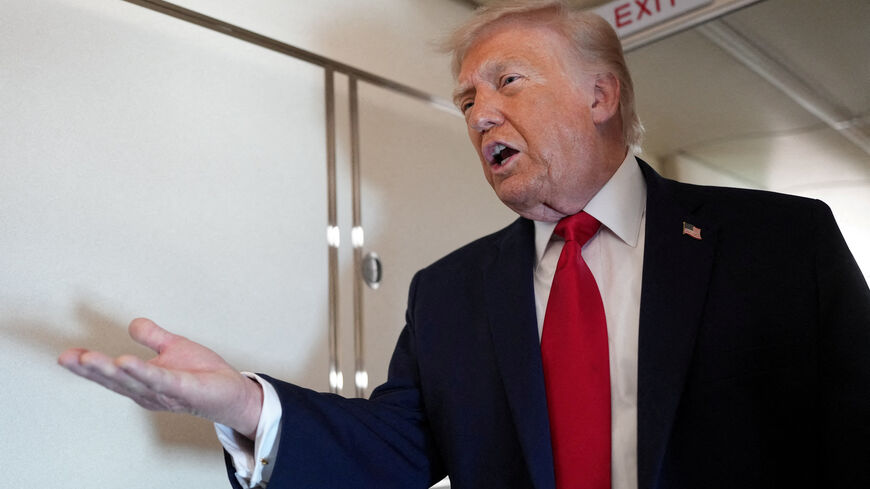
U.S. President Donald Trump gestures at Joint Base Andrews in Maryland, U.S., March 11, 2026. REUTERS/Kevin Lamarque

Iranian sea mines: the West's waterborne nightmare

Tehran is seeking to choke the vital Strait of Hormuz to oil traffic following US and Israeli strikes against Iran, with fears it could be using sea mines to do so.

US forces have struck 28 Iranian mine-laying vessels, President Donald Trump said Wednesday, more than a week into the Middle East war.

Any Iranian mining of the key shipping lane, as its forces did in the 1980s, would be a nightmare for Western demining teams.

Here's an explainer:

- What are sea mines? -

Any Iranian mining of the key shipping lane, as its forces did in the 1980s, would be a nightmare for Western demining teams

War disrupts fertiliser supplies, puts food security at risk

With production in the Gulf countries at a standstill and gas prices rising, the war in the Middle East is disrupting the supply of fertilisers and posing risks for food security.

A third of fertiliser shipped by sea comes from the region and cannot make it to the global market as Iran has effectively closed the Strait of Hormuz.

That has sent global fertiliser prices soaring, with the UN expressing concern in particular about the impact on developing countries.

- The Gulf is a key manufacturer -

Artificial fertilizers provide key nutrients for food crops, with yields at risk if farmers cannot buy them