



Hezbollah starts 2015 facing setbacks
Hezbollah is set to face what could be an eventful year, after it has had a number of significant setbacks over the last few weeks.
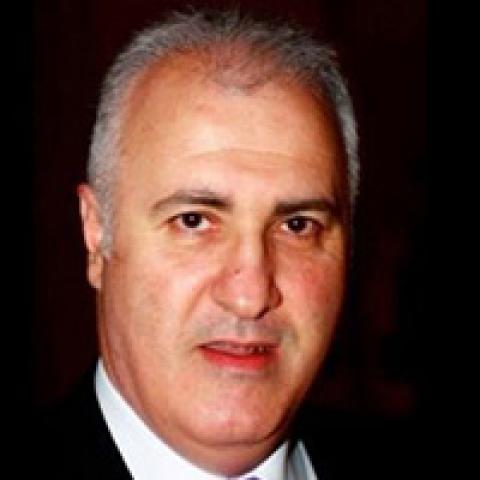

The end of 2014 and the first days of 2015 witnessed a series of events that targeted Hezbollah, the most powerful Shiite group in Lebanon and perhaps the Middle East. Within a few days, a series of political, security, judicial and military events in Lebanon and in neighboring and other countries all seemed to be targeting Hezbollah.
On the Lebanese political level, news spread on Dec. 28 that Ghaleb Abu Zeinab, a member of Hezbollah’s political bureau, had resigned from his position as an official in charge of his party’s relations with the Christian political authority. Abu Zeinab quickly explained that he had decided to hand in his resignation weeks ago for personal reasons that are not linked to any political or partisan dimensions. He wanted to have more time to take care of personal and family matters. However, news leaks continued to aggravate the event and included it in the list of suspicious matters happening within the party.
One of the reasons mentioned behind Abu Zeinab’s resignation, which was denied by the former official, were rumors about him being related to another official in Hezbollah who's said to have been arrested on charges of spying for Israel. This was the second targeting of Hezbollah on the security and on the Lebanese-Israeli levels. Gulf newspapers published stories on Dec. 17 saying that a prominent official who occupies a sensitive security position in Hezbollah with the initials M. S. was spying on his party for Israel. Days later, further leaked media information became public. On Dec. 25, the same media outlets reported Agence France-Presse publishing a detailed report about the suspect from Hezbollah; his full name was Mohammad Shawraba and that the fact that he was spying for Israel resulted in the failure of a series of security and intelligence operations Hezbollah was planning to execute against Israel.
While Abu Zeinab quickly rushed to explain his resignation to the media, Hezbollah remained silent regarding the arrest of one of its members on charges of spying. No governmental source and no Lebanese official commented on this news and there was no mention of whether the figure was arrested by the government or the party. This is considered to be a common tradition in the so-called resistance security in Lebanon, which is surrounded by maximum secrecy on both the official and partisan levels, except for what one party willingly wishes to reveal.


