



Hezbollah, Future Movement eye presidency
Hezbollah and the Future Movement have begun a dialogue on filling Lebanon's presidency, offering some reason for hope.
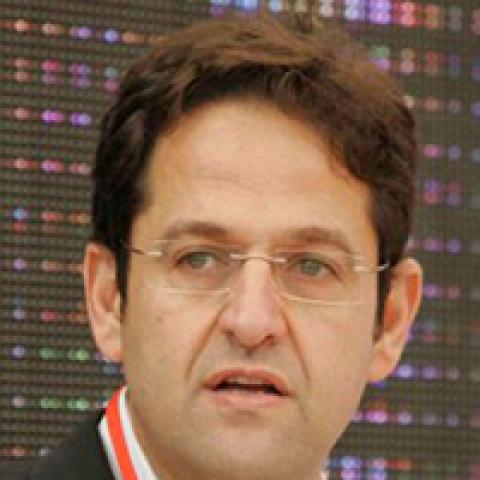

The Future Movement and Hezbollah held a dialogue Dec. 24 under the auspices of parliament Speaker Nabih Berri. Attending on behalf of the Future Movement were Nader al-Hariri, director of the office of former Prime Minister Saad al-Hariri, Minister Nouhad al-Machnouk and the parliamentarian Samir al-Jisr. Representing Hezbollah were Hussein Khalil, political assistant to the party's secretary-general, Minister of Industry Hussein al-Hajj Hassan and the parliamentarian Hassan Fadlallah.
Despite the positive nature of the event, no serious sign has emerged that the dialogue will lead to electing a president for the republic. The presidential issue is subject to a Saudi-Iranian settlement that seems far from being realized in light of the conflicts between the two countries over various regional issues, including Syria, Yemen and Iraq.
The threat posed by the Islamic State (IS) has resulted in a tactical rapprochement between Iran and Saudi Arabia, as both countries fear the growth of Sunni extremism, albeit for different reasons. The sole reason that the Lebanese government was formed in February 2014, after a 10-month delay, was from fear of the possible effects of a political vacuum on security. This was especially so after Syrian groups reached Beirut's southern suburbs, Hezbollah's stronghold, setting off a number of explosions. The tactical agreement stemming from the threat posed by the expansion of IS softened Hezbollah's stance and put an end to the party's boycott of sessions to elect a president.
One of the people following up on the dialogue between the Future Movement and Hezbollah told Al-Monitor that there might be a glimmer of hope for electing a president. Speaking on condition of anonymity, the source said, "Hezbollah is concerned about security developments on Lebanon's eastern border with Syria, especially after Jabhat al-Nusra and IS took control of the mountains and became a direct threat to Lebanon's Bekaa [Valley], which is Hezbollah's weak spot," he said. "Going too far with the presidential vacuum threatens security and stability and weakens respect of the state's institutions, particularly the security institution and the army, which is engaged in a military confrontation with terrorism. Not to mention the issue of the kidnapped soldiers, which embarrassed Hezbollah and left it no choice but to support the state's institutions."


