



Fatah’s Barghouti pushes hunger strike for 3,500 prisoners
Imprisoned Fatah senior leader Marwan Barghouti calls for the group’s prisoners in Israel to start a hunger strike over imprisonment conditions.
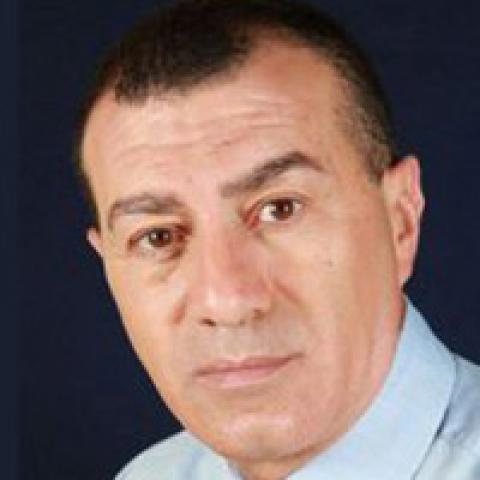

On April 17, about 3,500 Fatah prisoners incarcerated in Israeli prisons plan to begin a hunger strike. The strike is being organized by the organization’s high-ranking member Marwan Barghouti, who was sentenced in 2004 to five consecutive life terms and is being held in a prison in the south of Israel.
According to data presented by the Israel Prison Service, about 2,900 Fatah prisoners are incarcerated in Israel. Qadura Fares, the head of the Palestinian Prisoners Club, told Al-Monitor that there are about 3,500 Fatah prisoners when including Fatah detainees under investigation (meaning those detained but not sentenced yet) and administrative detainees (many of the detainees and prisoners are held in the southern Ketziot Prison). The 2,900 sentenced prisoners make up close to half of the Palestinian prisoners in Israel. Fares said he believes the hunger strike can be averted: He said Israel should enter into negotiations regarding the prisoners’ demands, to reach a compromise. But, he said, “Instead of acting rationally and logically, Israel prefers to create a field hospital near the Ketziot Prison and prepare for the strike.”
Fares was referring to Public Security Minister Gilad Erdan's statement that Israel will not surrender to the demands of the prisoners and is making advance preparations for the hunger strike. For example, a field hospital is to be erected close to Ketziot so that if hundreds of prisoners go on strike, they will not have to be transferred to Israeli hospitals, which could wreak havoc on Israel’s health system. Among other steps, Erdan ordered a call-up of reserve soldiers.
Tension among security prisoners in Israel has been high for many months. The Palestinians claim that as the number of inmates rises in the prisons, Israel toughens its policy toward them; the cells are more crowded and prison conditions are worsening, bringing the situation to a boiling point. Fares said that according to data received by the Palestinian Prisoners Club, the number of Palestinian prisoners from all the organizations has risen by almost 2,000 following the eruption of the recent terror wave in October 2015. This brings the total number of inmates to almost 6,000, very similar to the number of prisoners during the second intifada.


