



Will Hamas respond to assassination of military leader?
Hamas is blaming Israel for the killing of military commander Mazen Faqha but is waiting on a commission of inquiry before announcing any response.
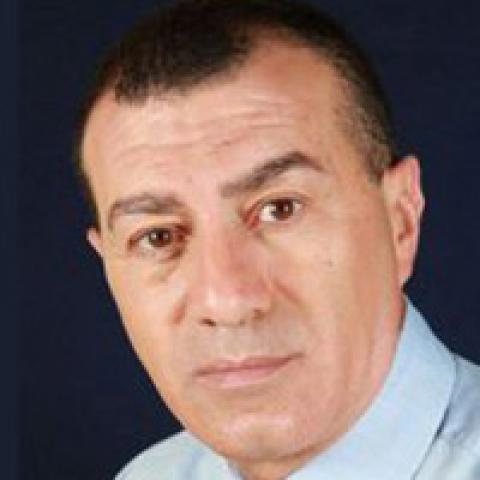

Mazen Faqha, a senior member of the armed wing of Hamas, was shot and killed on March 24. In Gaza, the prevailing view is that Faqha, who was freed from an Israeli jail in a 2011 prisoner exchange deal with Hamas, was assassinated by a unit of undercover Israeli soldiers. Israel had held him responsible for activating terrorist cells in the West Bank. A preliminary investigation suggested the killers used silencers, leading senior Hamas officials to suspect that he was not shot by “enemies from within,” but by Israelis.
Faqha was killed in the area of Tel al-Hawa, known as the “Hill of Winds,” a short distance from the Gaza coast. The location suggests the killers arrived from the sea, landed on the beach and with the help of local collaborators ambushed Faqha. Hamas decided to close off the Erez crossing from Gaza into Israel, preventing Palestinians from leaving the Gaza Strip until it could ensure that the collaborators had not fled.
In the past, when Hamas accused Israel of some mysterious explosion or other in Gaza, Israel was quick to issue an official denial of playing a role. This time, Israel neither confirmed nor denied involvement in Faqha’s assassination. Its silence could be interpreted as a tacit admission of guilt.
If Israel did, in fact, wipe out Faqha, it undoubtedly used a different modus operandi from previous assassination operations. Hamas founder Sheikh Ahmed Yassin, for example, was killed in March 2004 by a missile fired from an aircraft at him while his security guards were rushing him around in his wheelchair. His successor, Abdul Aziz Rentisi, was killed three weeks later by a rocket fired from the air at him while he was in his car.


