



The man behind the future of education in Palestine
In an interview with Al-Monitor, Education Minister Sabri Saidam discussed his efforts to move Palestinian students away from rote memorization and toward creative and analytical thinking in addition to modernizing the curriculum.
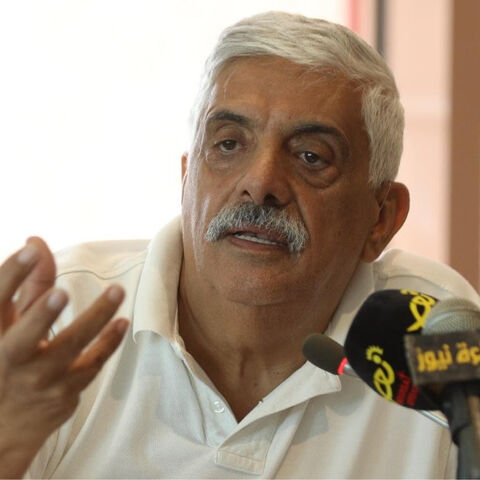

For more than 52 years, Palestinians completing 12th grade have faced a stressful, life-changing experience. Their admission to university has depended on how they do on a single, national exam. The “tawjihi,” the comprehensive matriculation exam designed to test knowledge and ability, has been a source of incredible pressure for students, their families and communities at large.
Young Palestinians cram for weeks before the exam and often lose sleep trying to be as prepared as possible, learning by heart the information that might be on the test. The results determine whether a student will be admitted to medical school or qualifies to study engineering. Thus, the test has become a huge part of Palestinian life.
Sabri Saidam, Palestinian minister of education and higher education, told Al-Monitor that he wants to revise the tawjihi, which he believes covers too much material and is based on rote memorization. In doing so, Saidam seeks to reduce the pressure on students and their families while also better evaluating students’ abilities.
In a comprehensive interview with Al-Monitor, Saidam, who was appointed in August 2015, also wants to use changes to the controversial test to introduce a much more effective education system. The test results often determine people's future and ultimately can bring great benefits to their families or keep them in poverty. Scholarships are available to students who get high grades. “This [testing] system divides society on the basis of the results of the tawjihi, which does not allow the students to express themselves and does not provide any space for analysis or interactive learning,” Saidam explained.


