



Confusion, controversy surround appointment of new police chief for Israel
Public Security Minister Gilad Erdan appointed reserve Brig. Gen. Gal Hirsch as Israel police chief, offering him a chance to clear his name following criticism of his conduct during the Second Lebanon War.
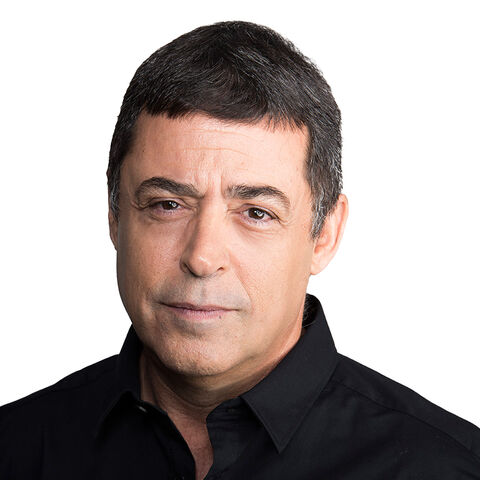

The story behind the appointment of reserve Brig. Gen. Gal Hirsch to the position of Israel’s next chief of police (inspector general) is greater than the sum of its parts. This decision involves more than professional, police-related considerations (the police force has been immersed in crisis for a long period, as detailed in a February Al-Monitor article) or political considerations (Prime Minister Benjamin Netanyahu invested much effort in trying to influence the naming of the police-chief candidate). This story is also affected by security considerations, with deep roots that go back to the Second Lebanon War that erupted nine years and one month ago in July 2006. With the backdrop of the war by the Israel Defense Forces (IDF) against Hezbollah in Lebanon hovering over this affair, it is no wonder that Israeli journalists made jokes Aug. 25 on Twitter, encouraging one another to “get [Hezbollah Secretary-General] Hassan Nasrallah’s take” on this strange and unexpected appointment. No doubt that even in the Hezbollah leader’s bunker, in Beirut's Dahiyeh district, people are keeping close watch on news of Hirsch’s appointment to the position of the State of Israel’s No. 1 policeman. They probably don’t understand the logic of this appointment. In Israel, as well, most of the pundits have difficulties understanding this decision.
Hirsch, a daring officer of paratroopers and other special units, served as Galilee Division commander during the Second Lebanon War. This is a regular division tasked with protecting the so-called blue line separating Israel from Lebanon, and the IDF from Hezbollah. Until July 12, 2006, Hirsch had enjoyed an almost perfect career.
Hirsch was a paratrooper, born and bred, and held command roles in the paratroopers reconnaissance platoon, one of the most prestigious IDF units. Hirsch was one of the planners of Operation Defensive Shield (2002) for subduing the second intifada, and he gave this very name to the commercial company he founded after his demobilization (“Defensive Shield Holdings”). Earlier, in the 1990s, Hirsch had served as commander of an Israel air force special forces unit, Shaldag. It was then that he first came to the attention of the IDF top brass, due to a mission he led in the depths of Lebanon. There he infiltrated a Hezbollah post, was prematurely discovered by the enemy, but refused to break off contact as he was instructed to do by the IDF command in Israel. Instead, Hirsch disconnected his communications apparatus and continued the battle until its successful conclusion. IDF rescue units barely managed to extricate Hirsch and his soldiers; it was touch-and-go for a while whether they would make it. The young commander was widely applauded (for bravery) afterward but also harshly criticized by then-Chief of Staff Amnon Lipkin-Shahak for violating orders.
One way or the other, Hirsch made his way up to the post of Galilee Division commander and was viewed as someone with a promising future ahead of him, including a shot at eventually being short-listed for the position of chief of staff. Then a Hezbollah force infiltrated Israel, hit and abducted two Israeli reserve fighters, Eldad Regev and Ehud Goldwasser (only afterward did it come out that they had been killed prior to the abduction), and the Second Lebanon War erupted.


