



Hamas military wing dictates movement's policies
Inside Hamas, the military branch is gradually taking even stronger control of the movement's institutions and blocking attempts to reach a long-term cease-fire with Israel.
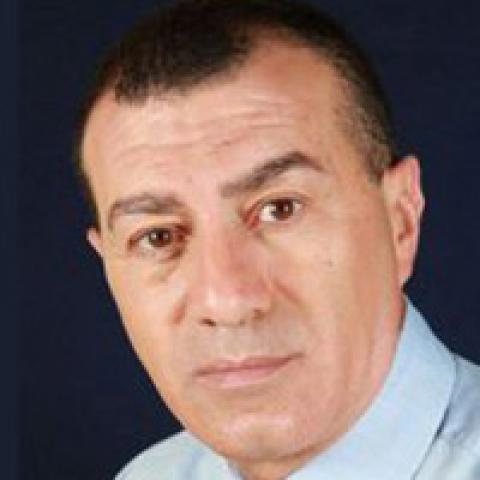

The tension between Hamas’ political and military wings is intensifying. Senior Palestinian Authority sources monitoring the events from within Hamas informed Al-Monitor on condition of anonymity that the leaders of the military wing, the Izz ad-Din al-Qassam Brigades, have been pressuring members of the political wing to stop probing the possibility of a diplomatic arrangement, whose main thrust is a long-term cease-fire. The military wing’s leader, Mohammed al-Deif, who according to reports has only recently resumed full activity in Hamas following an abortive attempt on his life during Operation Protective Edge in August, is pulling in a different direction. Espousing rapprochement with Iran, he wants to bolster Hamas’ military array in the Gaza Strip and prepare it for a future confrontation with Israel.
By contrast, the political wing, which understands full well Hamas’ dire situation in Gaza, is striving — through European brokers — for a long-term cease-fire with Israel. In its members' opinion, this direction will lead to a significant easing of the ongoing blockade over Gaza. The members of the movement’s political wing — Khaled Meshaal, Mousa Abu Marzouk, Ismail Haniyeh and others — apparently understand all too well that given that Egypt has almost completely sealed the Rafah border crossing and declared Hamas a terrorist movement, the chances for preserving a long-term Hamas rule in the Gaza Strip are getting slimmer. If Hamas fails to reach a rapprochement with Saudi Arabia — a possible new patron (following Qatar’s cold shoulder) — and if it fails to reach a long-term cease-fire arrangement with Israel, another armed confrontation with tragic consequences is just a matter of time.
The struggle between Hamas’ political and military wings is taking place at one of the movement’s most dramatic moments. It must choose between compromise and war, between acceptance that dramatic decisions have to be made in a complex reality and its policies, which have already brought it to the brink of disaster. Since the June 2007 coup, the leaders of the military wing have built a massive army consisting of tens of thousands of armed men and want to maintain and even expand the military hegemony they have instituted in Gaza. The political wing, on the other hand, realizes that without a diplomatic compromise with Israel, Hamas will lose its grip and rule in the Gaza Strip.
It should be noted that the communiqués relayed to Israel in recent months through various brokers, including UN special envoy Robert Serry, Swiss Consul Paul Garnier and more recently Saudi envoys, chief among them Prince Turki al-Faisal, have met neither a positive reaction nor a rejection. Senior Hamas official Ahmed Yousef, formerly Haniyeh’s political adviser, even confirmed to Maan news agency the political wing’s desire and overtures to reach formulated understandings with Israel.


