



Hakim warns about politicization of Iraqi army
In an interview with Al-Monitor, the head of the Islamic Supreme Council Ammar al-Hakim speaks about his conceptions for the Iraqi state and says that the Anbar crisis cannot be solved via a military solution.
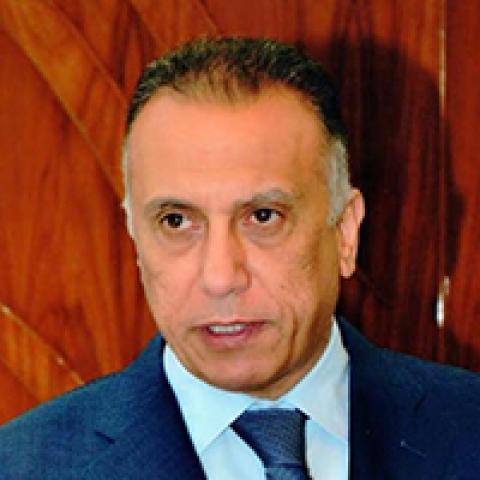

NAJAF, Iraq — Ammar al-Hakim, leader of the Islamic Supreme Council of Iraq (ISCI), recently put forth his vision for the political situation in Iraq and the accumulated crises. In an interview with Al-Monitor, he said that some crises — such as the Anbar crisis — cannot be solved by security means. He warned about the politicization of the army, and stressed that his electoral bloc possessed the most important card, namely the "credibility" card.
The interview:
Al-Monitor: What is your assessment of the root of the crisis in Iraq today? Is it a flaw in the constitution or in its application? Or rather a flaw in the political circles and parties?
Hakim: The root of the crisis in Iraq is represented by the absence of a unified understanding for building the new Iraqi state. Some seek to build the state on a centralized basis, while others seek to build it on the basis of a confederation and go beyond the framework of a federation. And some seek to make it a state of sects and nationalities. This is the main cause of the crisis. Each party's understanding [of the state] is reflected in its actions and behavior. In addition, the deficiency or vagueness in some of the constitutional mechanisms has opened the door wide for circumventing the constitution through individual efforts. Finally, many parties and political currents lack maturity when it comes to political experience. All of these factors put Iraq on course for a continuing crisis, but in our assessment, the basis of the crisis is the lack of a unified understanding regarding the new Iraqi state.


