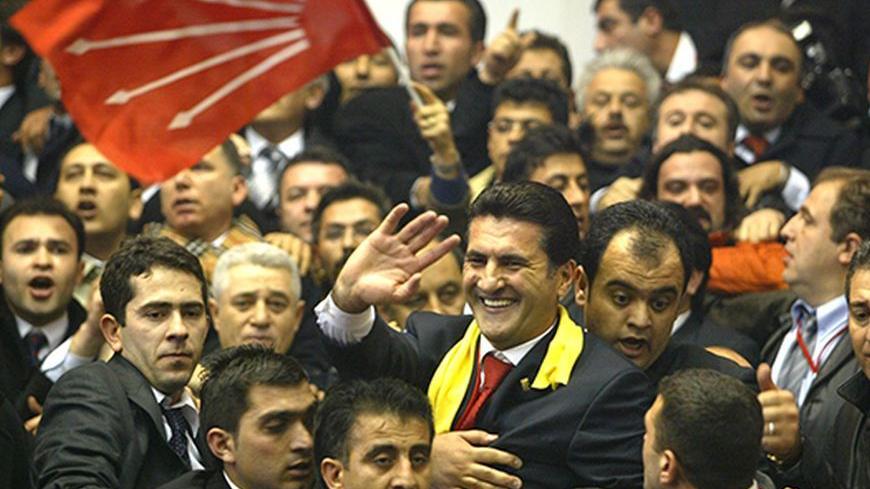
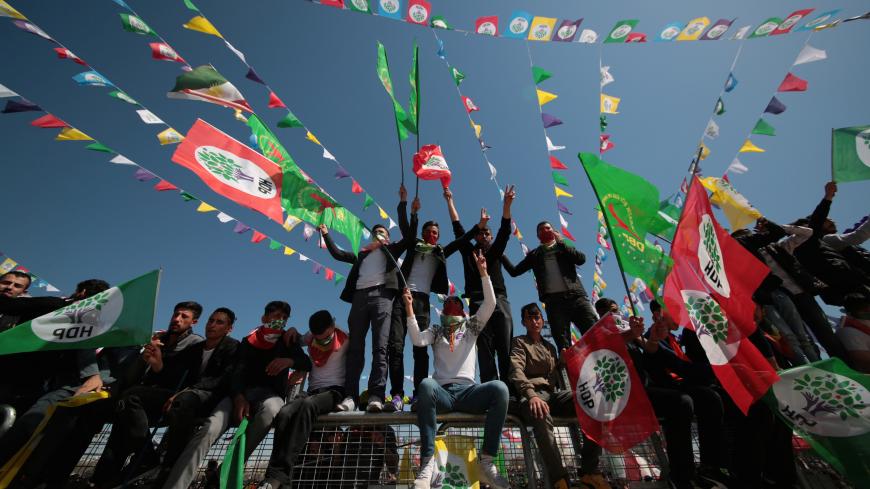
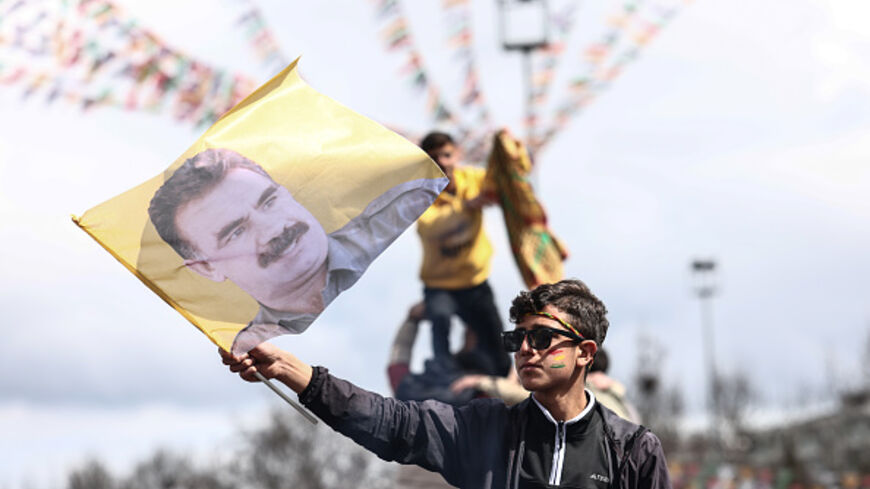
At a party convention in Ankara on Oct. 27, participants shouted intriguing chants. One of them — “Everywhere is Taksim, everywhere is resistance” — was the hallmark slogan of the protests that broke out in Istanbul on May 30 over the cutting of trees at Gezi Park and then spread nationwide.
Do the chants, shouted at the convention of the Peoples’ Democracy Party (HDP), indicate that a party is emerging to fill Turkey’s “democratic opposition” vacuum, which the Gezi protests themselves had underscored? A party that has allocated a 10% quota for LGBT individuals and a 50% quota for women, could the HDP have a say in Turkey’s future? To find the answers, let’s first see how the HDP was born.
Abdullah Ocalan, the Kurdistan Workers’ Party (PKK) leader serving a life sentence on the prison island of Imrali, had long called for an umbrella party to bring all leftist movements in Turkey together. He reckoned that the Peace and Democracy Party (BDP), which is currently represented in Parliament and over which he wields an undisputed moral authority, appealed only to the Kurds and confined itself to the southeast, failing to make a nationwide impact. In his view, an umbrella party could fill what he saw as a big void on the left flank of Turkish opposition.
Ocalan’s call yielded its first result during the 2011 general elections, when the BDP aligned with some 20 socialist parties and movements to form the Labor, Democracy and Freedom Bloc. The coalition managed to win 36 parliamentary seats and then united under the roof of the HDP. At its Oct. 27 convention, the party ushered into a new phase, electing Ertugrul Kurkcu, a prominent Turkish socialist, and Sebahat Tuncel, a leading figure in the Kurdish movement, as co-chairs.
AL-MONITOR All-Access gives you unlimited access to all our journalism, the full Daily Briefing, exclusive interviews, premium newsletters, and live events — for less than $2/week.