



Israel’s prisoner dilemma
Qadri Abu Wassel, a member of the Israeli Arab Monitoring Committee charged with overseeing Palestinian prisoners, expects the government to release Israeli Arab prisoners, whom he regards as political prisoners.
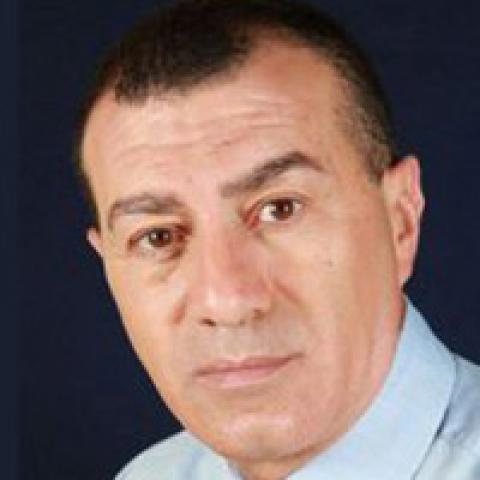

On Sunday, July 28, Prime Minister Benjamin Netanyahu failed to get his cabinet to approve the release of 14 Israeli Arab prisoners held in Israeli jails. His proposal was attacked by ministers and senior security officials alike, including the head of the Shin Bet Yoram Cohen. They argued that Palestinian Chairman Abu Mazen must not be granted patronage over the Israeli Arab population.
As a result of this severe opposition and Netanyahu’s concern that any failure to approve his proposal to release those prisoners would jeopardize the launch of negotiations with the Palestinians in Washington, it was eventually decided to remove the Israeli Arab prisoners from the list submitted to the Palestinian leadership and to decide on their release at some later date, as yet undetermined.
The most prominent of these prisoners is Karim Younis from Wadi Ara. In 1981, Younis and his relatives Maher and Sami Younis were involved in the murder of an Israeli soldier, Avraham Bromberg, who went to high school with Karim Younis in Hadera. The members of this terrorist cell gave Bromberg a ride, stole his gun, shot him in the head and threw him out of their car, leaving him to bleed to death on the side of the road. When he was found, Bromberg was unconscious. He died in the hospital four days later. It took two years before the three perpetrators were finally caught, and they were sentenced to life in prison. Sami Younis, who was not directly involved in the murder, was finally released as part of the Shalit deal, when he was 82 years old.
Over the past few years, Karim Younis has emerged as one of the most prominent leaders of Palestinian prisoners serving time in Israeli prisons. He was sentenced to life imprisonment in 1983. Some five years later, in 1988 (five years before the signing of the Oslo Accords), he wrote a book in his Ashkelon prison cell titled The Ideological Struggle and the Resolution of Differences. In the book, Younis called on the Palestinian leadership in Tunis, and Palestine Liberation Organization (PLO) leader Yasser Arafat in particular, to consider a change of attitude toward Israel. He wrote that Palestinians should recognize Israel’s existence, strive for an agreement on one state for two nations, and accept UN Resolutions 242 and 338.


