



Lebanese Prime Minister-Designate Seeks to Break Deadlock
Lebanese Prime Minister-designate Tammam Salam is considering new options to break the deadlock on his forming a new government, writes Jean Aziz.
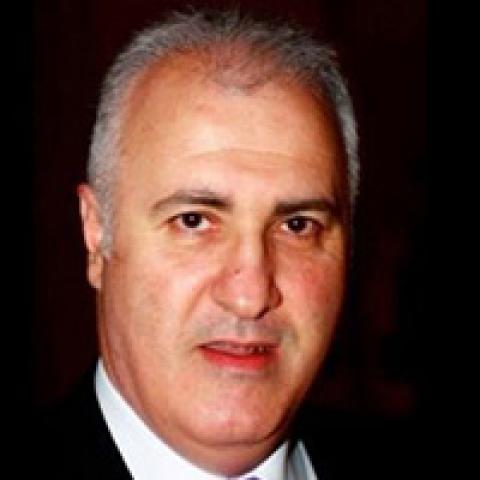

Almost one month and a week [April 6] after he was charged with forming a new Lebanese government, it seems that Beirut MP Tammam Salam of the Saad Hariri bloc has reached a dead end. It appears that the options available to him to break the impasse range from bad (declining the task, and thus keeping the country in a [political] vacuum) to worse (for example, moving towards a confrontational scenario). More importantly, these events could happen at any time.
There are several reasons for Salam’s failure to form a new government, based on the perspectives of both parties to the conflict. In the end, however, there is only one result. The Hariri bloc alliance and the alliance of Gen. Michel Aoun and the Shiite forces have not reached an agreement on quotas pertaining to the distribution of ministerial posts in the new government. There has also been no agreement on ministerial portfolios. The Aoun-Shiite forces alliance demanded that each team receive ministerial representation proportionate with its representation in the current parliament. Salam and the Hariri team rejected this proposal and insisted on keeping a one-third stake in the government reserved for the president, prime minister and [Druze] MP Walid Jumblatt.
Regarding ministerial portfolios, it is remarkable that the Hariri team — for the first time since its 1992 rise to power in Lebanon, thanks to the support of the Syrian occupation — demanded that the energy and telecommunications portfolios be held by representatives of the team or its allies. These two portfolios had been a burden on the state treasury for two decades until they were filled by ministers from the Aoun team, who succeeded in transforming them into a significant source of income for the public treasury. Major achievements were made, including the discovery of gas in Lebanese waters and an almost threefold increase in the number of cellular phone subscribers in Lebanon.
As a result of these positions and calculations, MP Salam set this weekend as a deadline for determining his options, which seem to be limited.


