



Hezbollah Confesses To Hand in Qusair Battle
Hezbollah Secretary-General Hassan Nasrallah has explicitly acknowledged his party’s role in Syria, and sources describe the battle for Qusair.
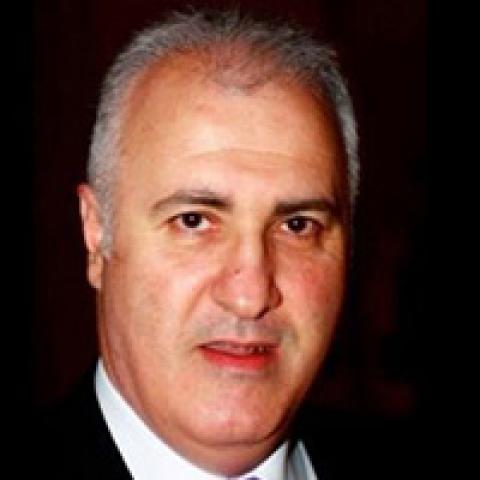

Events have rapidly progressed lately on the Lebanese Shiite scene, beginning with the public admission by Hezbollah of its military participation in the battles raging in the Syrian city of Qusair. In a speech given Saturday, May 25, on the anniversary of the Israeli withdrawal from Lebanon in 2000, Hezbollah Secretary-General Hassan Nasrallah explicitly acknowledged that Hezbollah was involved in the Syria war, fighting on President Bashar al-Assad’s side against what Nasrallah called the takfiris, who hail from a number of Arab countries, Balkan states or even from Asia Minor. These events go all the way to the firing of two rockets, by unknown perpetrators, on a neighborhood of Beirut’s Shiite-dominated southern suburb, considered Hezbollah’s stronghold in the Lebanese capital.
In light of these developments, sources close to Hezbollah began to more openly and transparently talk about the military battles under way close to Lebanon’s northeastern border, which, until a few days ago, was a taboo subject. In this context, those sources confirmed to Al-Monitor that Hezbollah’s losses in Qusair have in fact totaled 40 dead, in addition to a larger number of wounded. The sources explained that most of these casualties did not include “elite fighters” of Lebanon’s pre-eminent Shiite organization, as anti-Hezbollah media sources have publicized during the last few days.
The sources continued on to say that regular combat forces belonging to Hezbollah succeeded in reaching Qusair’s municipal building in the center of the city May 19. As is the case in all military operations, once the initial incursion into the heart of enemy territory is achieved and the advance is complete, the incursion strike force cedes its role to support units that are called in to secure the area, thus allowing the strike force to move on to its next target. But sources close to Hezbollah told Al-Monitor that what was overlooked was that the support units called in that evening were predominantly composed of non-professional fighters, mostly volunteers or enthusiasts who joined the main fighting forces stationed in the rear, on the Lebanese border region of Hermel, close to the battleground. According to our sources, these fighters belong to a generation of men who did not see action in the July 2006 war that Hezbollah fought against the Israeli army.
Three tragic surprises awaited those fighters as they entered Qusair’s center. The first was sophisticated booby-traps Syrian opposition militants had planted on each street corner they vacated. The second was the emergence of opposition fighters from hiding places they had prepared underground in secret tunnels dug a long time ago. And the third was the effectiveness of Syrian opposition snipers, armed with very advanced rifles that allowed them to pick off a number of Hezbollah fighters from long distances, and from camouflaged fortified positions that facilitated their task.


