



Israeli Finance Minister Lapid Leaves Out Peace
Akiva Eldar listened to the speech of Finance Minister Yair Lapid at the annual conference of the INSS, and remarked that the word “peace” was missing.
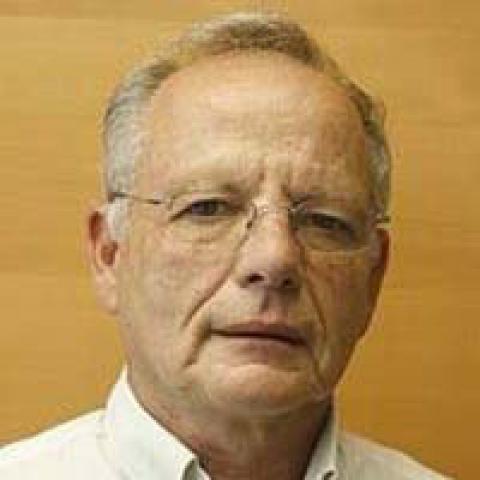

Addressing the annual conference of the Institute of National Security Studies (INSS) this week, Finance Minister Yair Lapid said the first person he had consulted upon taking office was President Shimon Peres. And what advice made the greatest impression on him? “Peres told me, ‘Yair, the most dangerous thing you can do is to do nothing',” Lapid said, reading from the teleprompter.
And what noteworthy deed did the leader of the country’s second-largest political party bring with him to the conference on the subject of A Changing Strategic Environment Requires Creative Thinking? Speaking to the hundreds of researchers, defense officials and diplomats in attendance, he revealed that “there’s no national security without economic security and there’s no economic security without national security.”
He then proceeded to make many promises and raise many hopes: The hope of housing, the hope of military service by all, the hope of a reduced cost of living, hope of an outstanding school system and hope of a society that places the working man front and center. I wondered whether I was the only one in the hall who felt the absence of one particular hope in the speech of the promising politician, recently dubbed by Time magazine as one of the 100 most influential people in the world — the hope for peace.
Nobel Peace Prize laureate Shimon Peres, who occupied Lapid’s chair many years ago, can tell him a thing or two about the link between peace and economics, or, more precisely, between occupation and economics.


