



Hezbollah Satisfied With Israeli Election Results
Nasser Chararah explains how Hezbollah interprets Israeli politics and the recent elections.
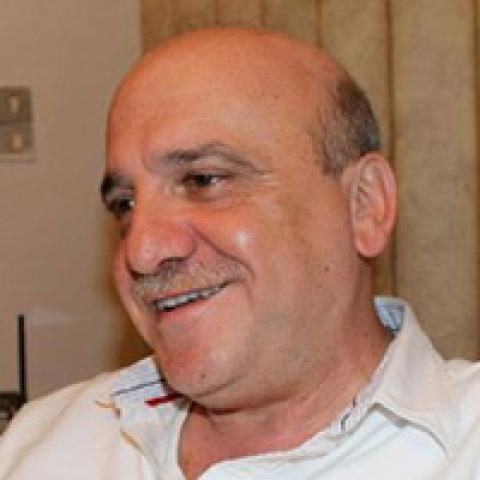

Hezbollah has several departments that specialize in monitoring events in Israel. They monitor everything that happens in Israel, then analyze that information by cross-checking it with privately-collected information. Inside these departments is a unit whose roots in monitoring Israeli events go back the 1975-1981 era, when the Palestinian Fatah movement was a state within a state and had its various institutions stationed in Lebanon. This unit is the remnant of Fatah’s so-called “Western sector,” which was directly led by Fatah’s second in command, Khalil al-Wazir (aka, Abu Jihad), and whose sole mission was to monitor the situation in Israel and assess its intentions toward Lebanon and the conflict in the region.
Throughout his life, Hezbollah’s military commander Imad Mughniyah was one of the most prominent examples of a Lebanese person inside Hezbollah who descended from Fatah’s Western Sector experience, before they embraced Hezbollah’s religious doctrine between 1983 and 1985. The members of this Hezbollah unit are now in their fifties and are highly knowledgeable of Israeli affairs. Over the past 20 years, Hezbollah has added a new generation of researchers and observers of Israeli affairs to the Israel-monitoring unit, of which they now constitute the majority, numbering in the dozens. Inside the party, they are known as “the Hebrew mujahideen.” Recently, they have been closely monitoring and analyzing the Israeli election and its implications on the “Israeli political structure,” the “security, military, and political open battle between Israel and Hezbollah,” and “Israeli political changes toward Lebanon, the resistance, Syria, and Iran.”
After examining the Israeli election’s results, the Hebrew mujahideen’s main conclusion is that the election has extended the historic leadership vacuum in Israel. Hezbollah is particularly interested in that aspect because, after an in-depth examination of the July 2006 war between Hezbollah and Israel and of the manner by which the Olmert, Peretz and Halutz troika led the war, the party has reached a strategic conception of the situation. The conception is the following: Whenever senior Israeli leaders reach their positions because of unstable internal considerations — such as what put the above troika in power — it means that Israel’s strategic thinking is prone to be less deep and less experienced, which allows Hezbollah to prevent Israel from scoring victories in upcoming wars with the party.
Accordingly, Hezbollah was satisfied with the results of the recent election because all of the “real leaders” who have military and strategic experience with Hezbollah — such as Ehud Barack, Gabi Ashkenazi, Amos Yadlin, Meir Dagan, and Shaul Mofaz — are now outside the loop. Shaul Mofaz’s party lost in the election.


