x

Tunisia's Shiites Hunker Down Against Rising Discrimination

A Shiite Muslim walks over burning coal during a religious procession as they mark Arbain, Jan. 15, 2012. Shiites commemorate Arbain to mark the end of a 40-day mourning period for Imam Hussein, Prophet Mohammad's grandson, who died in 680 A.D. (photo by REUTERS/Amit Dave)


By: Mischa Benoit-Lavelle Posted on September 16.

GABES, Tunisia — If you walk by Mubarak Baadache’s home in this palm-filled seaside oasis town near Tunisia’s border with Libya during the Muslim month of Muharram, you will hear a sound blasting from an old cassette that is heard almost nowhere else in Tunisia: Shiite prayers.

About This Article

Summary :
Shiites in Tunisia say they’ve seen a rise in discrimination against them, particularly from Salafists or fundamentalist Sunni Muslims. “They threaten us online and in the street every day,” said one. “They are narrow-minded.” Mischa Benoit-Lavelle reports for Al-Monitor.
Author: Mischa Benoit-Lavelle
Posted on: September 16 2012
Categories : Originals Tunisia  

Baadache is the self-proclaimed leader of the Shiite population in Tunisia and one of the only Tunisian Shiites to proudly and publicly confess his faith to the media.

“They say that if you drink Sheikh Baadache’s tea, you’ll become a Shiite,” joked Khaled, one of Baadache’s disciples who asked his last name not be published, as he poured a glass.

By “they,” Khaled means the Sunni Muslims of Baadache’s town, who say a lot of things about Baadache that are not very nice. But the sheikh remains defiant and unafraid, calling on his critics to debate him in a voice so loud it’s as if he wished them to hear him from the street. 

However, some fellow Shiites who had gathered at Baadache’s home, and who asked that their real names not be given, expressed more trepidation. Recently, they’ve seen a rise in discrimination against them, particularly from Salafists or fundamentalist Sunni Muslims.

“They threaten us online and in the street every day,” said Khaled. “They are narrow-minded.”

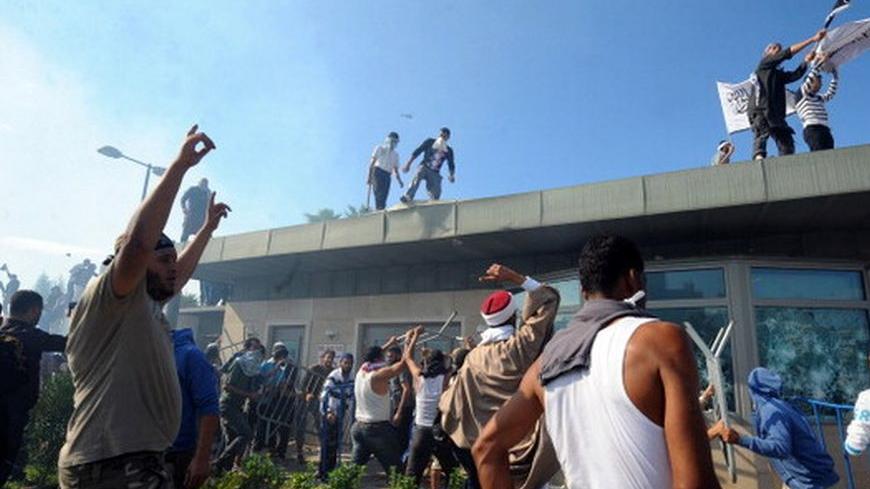
The month of Ramadan saw an unprecedented series of attacks targeting Shiites throughout Tunisia, with observers attributing the violence to Salafists. On Aug. 15, Tunisian singer Lotfi Bouchnak was prevented from performing in Kairouan by a group who blocked the entrance to the venue because Bouchnak was accompanied by a troupe of Shiite musicians from Iran. 

The following night, in the northern coastal town of Bizerte, another group of Salafists armed with knives stormed a youth center where the Lebanese militant Samir Quntar, who was born Druze but converted to Shia Islam, was to give a speech. The following day, in the southern city of Gabès, a pro-Palestinian march organized by an association of Tunisian Shiites was violently confronted by baton-wielding Salafists.

Public figures with anti-Shiite views seem emboldened by the attacks. Adel Almi, the leader of a religiously conservative group not affiliated with the Salafist movement, told the Tunisian news website Business News that Shia Islam was “a cancer to be combated,” while Abou Ayadh, a self-described “Salafi Jihadi,” said in an address broadcast on YouTube that Shiites were “non-Muslims who don’t have a place in our country.”

Tunisia’s emboldened Salafist movement has used Facebook and public rallies to spread its anti-Shiite rhetoric as well. 

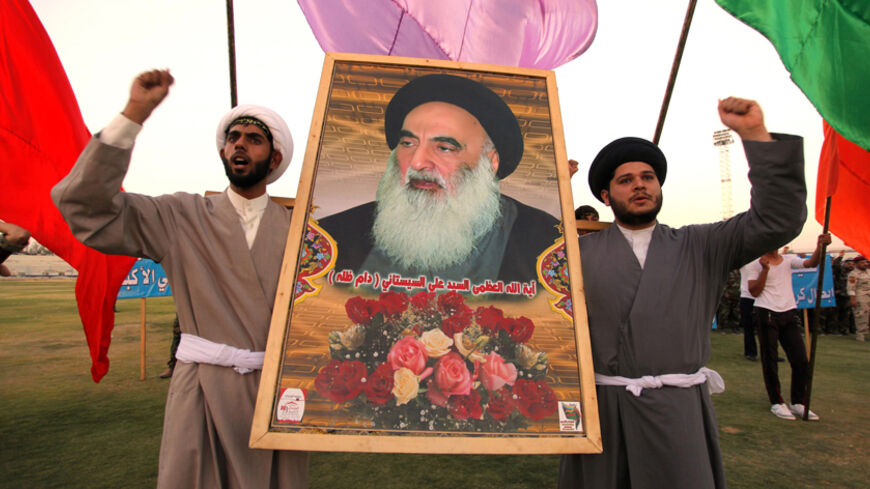
For these Sunni conservatives, Shiites are not real Muslims but kufar, an Arabic word meaning “heretics,” because they revere the Prophet Mohammad’s cousin and grandson, Ali Ibn Abi Talib and his son, Hussein Ibn Ali, who were both killed in a dispute over who should succeed Mohammad. 

Politically, the Salafists see Shiites as servants of Iran who are against the recent “Muslim revolutions” like the one in Syria.

However, it’s not just the religiously ultraconservative who have spoken publicly against Shia Islam in Tunisia.

Ahmed Ben Hassana is a well-known lawyer who dismissively describes Salafists as “a little stupid.” He is also the founder and head of the Tunisian League Against the Shiite Tide, a group whose Facebook page has 3,000 fans and continues to grow. After the attacks in August, Ben Hassana argued on Tunisian radio for the closing of the Iranian Cultural Center. He sees Iran as secretly cultivating “sleeper cells” of Shiites throughout the Arab world, from Yemen to Morocco, in an attempt to “export the Iranian Revolution.”

While he claims that his cause is not against Shiites themselves, only Iran’s influence in Tunisia, his speech also borrows from the bigotry of Salafist preachers: he says that if Shiites were allowed to practice their rites, such as self-flagellation, it would be a “threat to public order” and that according to Shiite doctrine “90 percent of Islam is lying.” 

“They are not Muslims like us, and the difference could bring about violent conflicts,” said Ben Hassana. 

The theory that Iran is supporting the spread of Shia Islam in Tunisia also finds backing from non-Islamist members of Tunisia’s new government. Ali Lafi, a political analyst and an adviser at the Ministry of Religious Affairs, is a member of the secularist Ettakatol party, but maintains that some Shiite groups, like the Ahl Al-Bayt Cultural Association which organized the pro-Palestinian march in Gabès, receive “cultural assistance” from Iran in the form of books and DVDs. He’s heard rumors, but cannot prove, that these institutions even get financial assistance from Iran.

Little is known for sure about Tunisia’s Shiites. Estimates as to their total number range anywhere from a few dozen to a few thousand. Since no official data has ever been collected on sects of Islam in Tunisia, and because Shiites in Tunisia are known to keep their faith a secret and worship side by side with Sunnis, it is impossible to determine a definite number.

However, one fact that is generally acknowledged is that if there is a “capital” to the Shiite population in Tunisia it is the sleepy town of Gabès. 

Gabès has seen several modestly attended Shiite cultural events and demonstrations by Shiite groups since the revolution, including the one that resulted in the violent confrontation with Salafists in August. While this may hardly seem to constitute an invasion, it is enough to draw attention in this nearly religiously homogenous country.

Since there are no mosques or other public gathering places for Shiites in Gabes or anywhere else in Tunisia, the Shiite “community” in Gabès centers around Mubarak Baadache’s home.

In the 1970s, Baadache came into contact with Ennahdha leader Rashid Ghannouchi, and was one of the founding members of Ennahdha, acting as the movement’s regional leader for the Gabès governorate.

Baadache’s encounter with Shia Islam came by way of the Tunisian writer Mohamed Tijani Smaoui, another Ennahdha member, who himself converted after studying in Iraq with the prominent Shiite cleric and political leader Mohammed Baqir Al-Sadr.

“His words gripped me,” said Baadache. He broke with Sunni Islam, and thus with Ennahdha, and started to attract his own followers.

Baadache and his followers admit that they have received books and other materials from Iran, but deny vehemently that any financial assistance was ever, or is currently flowing in from the Iranians. He is, however, unabashed about his desire for Tunisians to discover what he considers the true path of Islam.

“We don’t have real freedom of speech. If we did maybe all Tunisians would convert to Shia Islam,” said Baadache with a mischievous smile. According to Baadache, Shia Islam is indeed growing in Tunisia every day and there are Shiites present throughout the country, though he couldn’t give an estimate as to the number.

Moncef, a Shiite from Gabès, couldn't care less about the local or religious dynamics of Shiism. He came to Shia Islam after a process of spiritual exploration during which he read books about many religions, even contacting some friends in America for information about Christianity.

“I was asking myself questions like ‘Who am I?’ ‘What am I doing here?’ It’s my path, it has nothing to do with Islamic movements or Palestine. It has nothing to do with Iran,” said Moncef. “We love this country, it’s our country. We just have another idea, another thought.”

Meanwhile in Gabès and neighboring towns, anti-Shiite sentiment continues to grow.

Though the handful of cultural events put on by Shiites in Gabès brought together only a few hundred people, the fact that they were held publicly at all would have been unheard of in pre-revolutionary Tunisia. They gained further visibility after a documentary on the Tunisian television station Attounissia contained interviews with Tunisian Shiites in the Gabès region. For many residents, it was the first time that they knew for sure what they long only heard as rumor: there are Shiites in Gabès. Some have reacted to this news with fear.

“After [the documentary], there were people who said ‘this isn’t possible.’ It’s a conservative society; people are afraid of whatever’s new,” said regional General Secretary of the Tunisian League of Human Rights Taofik Jeridi. 

According to Jeridi, that fear has been stoked in the past several months by anti-Shiite programs on popular foreign satellite television stations such as the Egyptian Al-Reselah and the Saudi Safa and Wassal channels, Sunni channels that have always had a strong political tint. Because of the geographic and religious affiliations of these stations, the outbreak of war in Syria and the support Iran and Hezbollah have given to Syrian President Bashar Al-Assad’s regime, the stations have broadcast more and more anti-Shiite propaganda.

Jeridi explained that some Imams in the Gabès region, both Salafist and others, have begun including anti-Shiite rhetoric in their sermons, decrying the invasion of Shia Islam into Tunisia and presenting followers of the sect as a threat to Tunisia’s religious identity.

Jeridi does not completely dismiss the theory that Iranians are spreading Shia Islam in Tunisia. But for him the threat to Tunisian’s safety and liberty does not come from the small group  of Shiite Muslims, whom he estimates at only a few hundred, but from the increasingly virulent reaction against them from extremists.

“The danger isn’t real. The Salafists are intentionally inflating it. They have an interest to do that to gain influence,” said Jeridi. 

By exaggerating the threat of Shia Islam and elevating Iran to the level of an looming invading enemy with a fifth column of secretive locals preparing the groundwork, Jeridi  says the Salafists cast themselves as defenders of Tunisian identity, a seductive idea in a country that has long been suspicious of outside influence. What’s more, Tunisians on the whole are sympathetic to the resistance in Syria, so by framing their movement against Shiites as the local branch of that conflict, Salafists could well sway the minds of young men who fancy themselves as freedom fighters.

Some imams in Gabès are worried, and have taken it upon themselves to try to moderate the tone of religious discourse. Mohamed El Fassi, the imam of the Aisha mosque in downtown Gabès, has called upon his fellow preachers in the Gabès Association of Imams to talk with those that are encouraging fear and intolerance of the Shiites.

“What we should aim for as Muslims is a common ground. You can remain Shiite and I can remain Sunni, but we try to find a common ground to live together,” said El Fassi. “We have to try to understand why they’ve chosen Shia Islam. After all, we have the same Quran, the same God, the same Prophet.”

Until then, Gabès will remain the unlikely arena of a battle against what is almost certainly a phantom enemy: the Tunisian Shiite.

Mischa Benoit-Lavelle is an American freelance journalist based in Tunis, Tunisia. Before becoming a freelancer, he was a senior editor for Tunisia's first English-language news website, Tunisia Live. He is currently the English-language correspondent from Tunisia for the French news network France 24.

Back to news list


Welcome to Al-Monitor!
Our site brings together, for the first time, top journalists from across the Middle East including Iran, Iraq, Israel, Lebanon, Palestine and Turkey. Plus daily translations from 20 major news organizations in the region.


Watch a video about us.