



Palestinians work for Abbas-Trump meeting next
After positive meetings with CIA Director Mike Pompeo, the Palestinian leadership believes it is in the interest of President Donald Trump to also hear the Palestinian side of the story.

The mood among Palestinians surrounding President Mahmoud Abbas wavers between desperation and hope and between cautious optimism and dire pessimism. They were beginning to feel like they were having some success with a policy of “quiet, smart diplomacy,” as top Palestinian officials described the initial feelers they sent out to the Donald Trump administration. Trump's comments on Feb. 15 therefore left them stunned. At a White House press conference with Israeli Prime Minister Benjamin Netanyahu, Trump surprised the Palestinians, saying, “I’m looking at two-state and one-state. I like the one that both parties like. I’m very happy with the one that both parties like. I can live with either one.”
In a conversation with Al-Monitor, a Palestinian security official said that it will take a long time for the Palestinians to unravel what they consider to be Trump's conflicting messages, the balance of power in the new administration and the overall mood regarding just about everything having to do with the Palestinian-Israeli conflict. “One day he's for the settlements, the next day he says that they don't contribute to peace. One day he's moving the embassy to Jerusalem, and then he says that he hasn't decided yet. This leaves us walking carefully between the raindrops,” he said, speaking on the condition of anonymity.
Concerns that the United States no longer regards the principle of a two-state solution as sacrosanct, as the only basis for an agreement with the Israelis, have been raised in every discussion among the Palestinian leadership since Trump's election. At the same time, however, the Palestinians also believe that the new administration realizes that it cannot act rashly and impetuously when it comes to the Palestinian-Israeli conflict. Instead, it must follow in the footsteps of previous administrations, with certain adjustments to reflect Trump's personal approach.
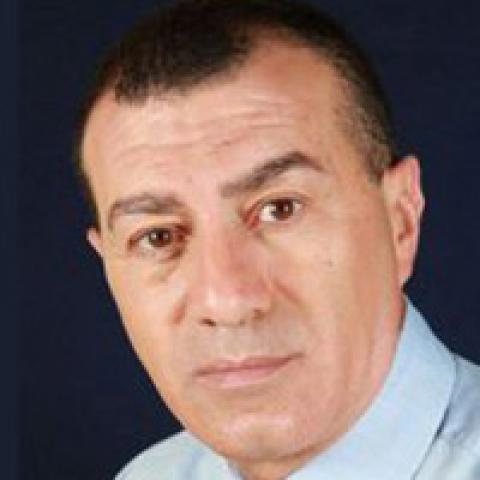
The Palestinians were feeling optimistic after a series of discussions that Majid Faraj, head of the Palestinian Security Services, had in Washington the second week in February and a meeting between Abbas and CIA Director Mike Pompeo Feb. 14 at Palestinian Authority (PA) headquarters in Ramallah. It seems that Faraj had persuaded Pompeo to visit Abbas in his office without the prior knowledge of the Israeli Foreign Ministry. In a meeting in Washington, Faraj had told Pompeo that he should meet with the Palestinian president so that he could hear for himself how serious and determined the Palestinians in general and Abbas in particular really are about reaching a final settlement with Israel.


