The new students attending the seventh session of the “Bridge to Arabic” language course can look out over the Mediterranean Sea from their classroom window. Over the next three months, they will spend one day a week steeped in Arabic language and culture in the village of Jisr az-Zarqa, one of the poorest Arab communities in Israel. The village sits along a stunning stretch of beach between Kibbutz Maagan Michael and affluent Caesarea.
Hundreds of thousands of Israelis a year drive along Highway 2, connecting Tel Aviv and Haifa. It is one of Israel's most beautiful main arteries. Immediately to the west of the highway lies the Mediterranean. To its east are lush green fields. But most passengers barely notice the road sign marking the entrance to Jisr az-Zarqa. Very few of them have ever taken the time to visit this “Arab fishing village,” trapped physically and culturally between the Jewish communities.
The “Bridge to Arabic” project was initiated by the Institute for Democratic Education of the Kibbutz Seminar to break through the metaphoric barriers surrounding Jisr az-Zarqa. And this wasn’t just for the sake of the villagers. It was also intended to benefit the Jews, who don’t usually turn off to the side of the road to visit their neighbors living by the sea.
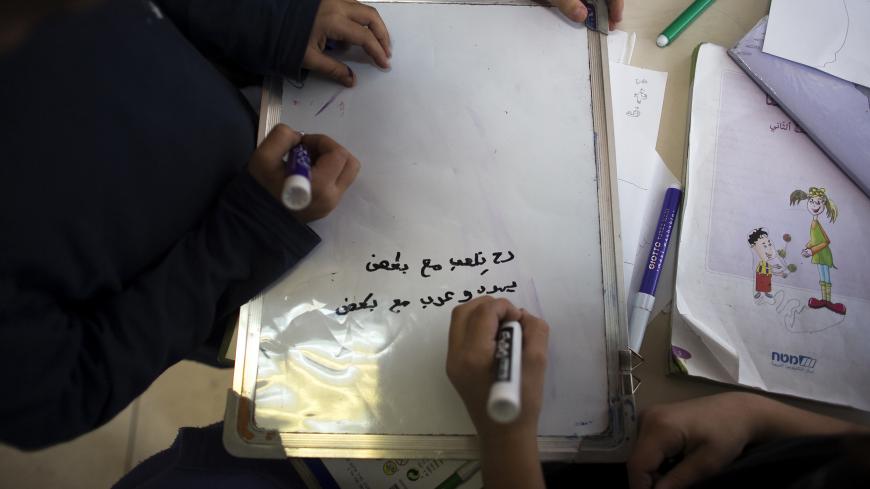
The seventh session of the Arabic-language course, which began January 2015, takes place in the Jisr az-Zarqa community center. During the course, students learn both spoken and literary Arabic. But they don’t just spend time sitting before a blackboard in classroom sessions. They also go on educational excursions in the stretches of wilderness along the village’s coastline and even have meals in the homes of local residents. All of their communication takes place in Arabic, of course.
AL-MONITOR All-Access gives you unlimited access to all our journalism, the full Daily Briefing, exclusive interviews, premium newsletters, and live events — for less than $2/week.